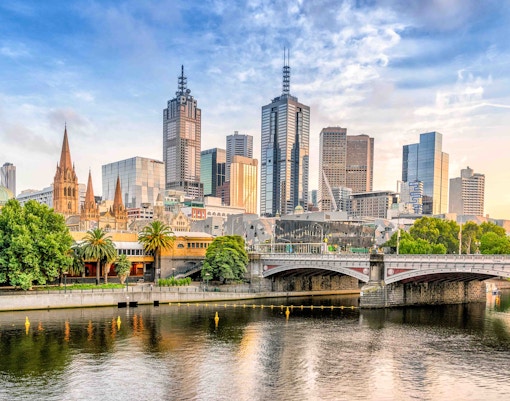
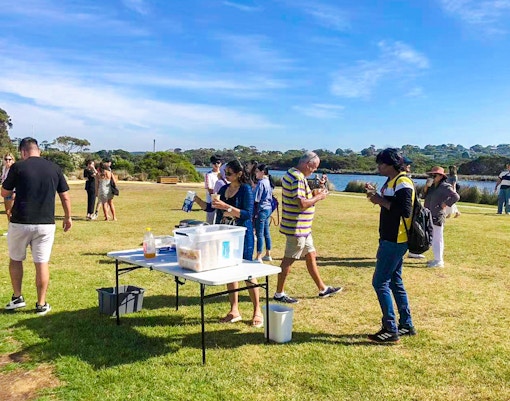
- Expect: Mild temperatures, increasing sunshine, and lighter crowds as the city transitions out of winter. Days feel comfortable for walking, with longer daylight hours returning.
- Highlights: Spring Racing Carnival build-up, park picnics, and outdoor dining reopening across the city.
- Average temp: 9–20°C (48–68°F)
- Good to know: Weather can shift quickly, so packing layers helps when temperatures change within the same day.
Melbourne Travel Guide | Things To Do, Tips, Weather & More
Melbourne is a coastal city known for its café culture, street art, live sports, and layered neighborhoods. As the capital of Victoria on Australia’s southeast coast, it blends creative energy with everyday livability. Whether you’re a first-timer keen to explore Federation Square or a repeat visitor chasing laneway dining and galleries, this guide covers the essentials: when to visit, what to see, how to get around, and where to stay, so you can plan your Melbourne adventure with confidence.
Travel essentials
| What this guide covers | Why it matters | Key details |
|---|---|---|
Best time to visit | Helps you plan around weather, crowds, and prices. | March–May and September–November offer mild weather and fewer crowds; December–February is busiest with higher prices and occasional heatwaves. |
Visa requirements | Prevents entry issues and delays. | Most visitors need an Australian ETA or eVisitor visa; US, UK, EU, and many Asian passport holders can apply online before travel. |
Health insurance | Avoids problems at immigration or emergencies. | Travel insurance is strongly recommended, as Australia’s public healthcare system does not cover most tourists. |
Local time & time zone | Helps with planning and bookings. | Melbourne uses Australian Eastern Time (UTC+10) and shifts to UTC+11 during daylight saving from October to April. |
Currency | Makes daily spending easier. | The local currency is the Australian Dollar (AUD), and cards and contactless payments are accepted almost everywhere. |
Budget | Sets realistic spending expectations. | Expect around AUD 120–170/day on a budget, AUD 200–280/day mid-range, and AUD 400+/day for luxury travel. |
Plugs & power outlets | Prevents charging issues. | Uses Type I plugs with 230V/50Hz electricity; travelers from Europe and North America need an adapter. |
Local SIM & data | Keeps you connected on the go. | Major providers include Telstra, Optus, and Vodafone; prepaid SIMs and eSIMs are widely available at the airport and city stores. |
Tipping culture | Avoids awkward tipping moments. | Tipping is optional; rounding up or leaving 5–10% is appreciated but not expected. |
Languages spoken | Helps with everyday communication. | English is the official language, and communication is easy across tourist areas. |
Water safety | Reduces bottled water costs. | Melbourne’s tap water is safe to drink and refill stations are common in public spaces. |
Public toilets | Solves a common sightseeing pain point. | Public toilets are widely available in the CBD, parks, and major attractions, and are usually free. |
Emergency numbers | Essential for safety and peace of mind. | Dial 000 for police, fire, or ambulance services anywhere in Australia. |
Best time to visit Melbourne
With its famously changeable weather and four clearly defined seasons, Melbourne delivers a different experience throughout the year. From summer sports and outdoor dining to winter museum hopping and theatre nights, timing your visit shapes how the city feels day to day. Here’s a seasonal breakdown to help you choose the right time for your trip.
Peak season
- December to February is Melbourne’s busiest period, driven by summer holidays and major events. Daytime temperatures typically range from 14–26°C (57–79°F), with occasional heatwaves pushing higher.
- Crowds are heaviest around the CBD, sports venues, and beaches, and hotel prices peak. Plan sightseeing early in the day and pre-book accommodation well ahead.
Low season
- June to August marks Melbourne’s winter, with cooler temperatures between 6–15°C (43–59°F) and more frequent rain. Visitor numbers drop, queues shorten, and accommodation prices soften.
- While outdoor attractions are less appealing, museums, galleries, cafés, and performing arts venues feel calmer and more accessible.
🌸 Spring (September–November)
☀️ Summer (December–February)
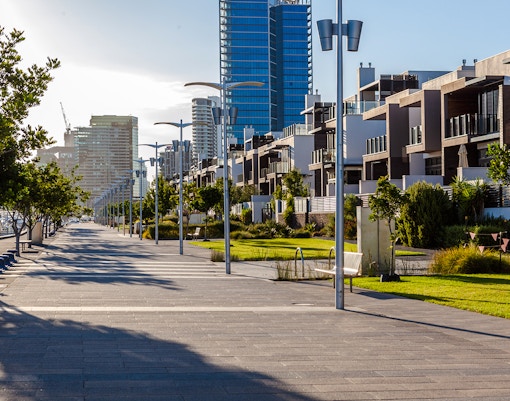
- Expect: Warm to hot days, a lively events calendar, and busy streets, especially during school holidays. Evenings stay long and social, ideal for riverside dining.
- Highlights: Australian Open, outdoor cinemas, rooftop bars, and coastal day trips.
- Average temp: 14–26°C (57–79°F)
- Good to know: Heatwaves are possible, so plan indoor attractions for peak afternoon hours.
🍂 Fall (March–May)
- Expect: Stable weather, cooler evenings, and fewer crowds after summer ends. Walking-heavy itineraries feel more comfortable.
- Highlights: Food and wine events, cultural exhibitions, and autumn colour in city gardens.
- Average temp: 10–22°C (50–72°F)
- Good to know: One of the best seasons for sightseeing and day trips without summer pricing.
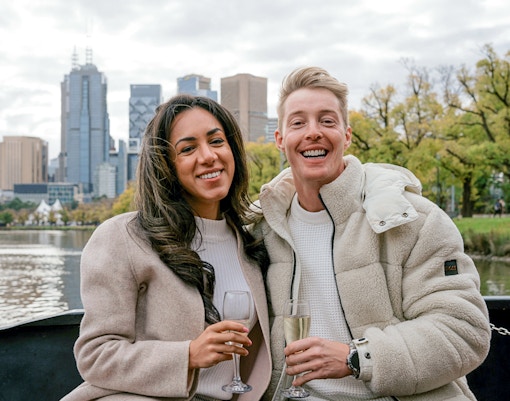
❄️ Winter (June–August)
- Expect: Shorter days, crisp mornings, and a quieter city atmosphere. Rainfall increases, but snow is rare.
- Highlights: Theatre season, museum hopping, cozy cafés, and live music venues.
- Average temp: 6–15°C (43–59°F)
- Good to know: Waterproof shoes and warm layers are essential for comfort.
Getting to Melbourne

Airports
- Melbourne Airport (MEL): Located about 23 km northwest of the CBD, with travel times of 30–45 minutes depending on traffic.
- Terminals: Terminal 1 (Qantas domestic), Terminal 2 (international flights), Terminal 3 (Virgin Australia domestic), Terminal 4 (low-cost carriers).
- Transfers: SkyBus runs 24/7 to Southern Cross Station in 30–45 minutes for AUD 24.60 one-way; taxis cost AUD 60–70; public bus plus train costs AUD 5.50 with a Myki card.
- Terminals: Terminal 1 (Qantas domestic), Terminal 2 (international flights), Terminal 3 (Virgin Australia domestic), Terminal 4 (low-cost carriers).
- Avalon Airport (AVV): Located 55 km southwest of the CBD, mainly serving low-cost domestic flights.
- Terminals: Single terminal handling all arrivals and departures.
- Transfers: SkyBus Avalon City Express reaches Southern Cross Station in 45–60 minutes for AUD 25 one-way; taxis are limited and expensive; no direct train connection is available.
- Terminals: Single terminal handling all arrivals and departures.

Rail connections
- Southern Cross Station: Melbourne’s primary long-distance rail hub, serving regional and interstate routes. Trains run to Geelong (~1 hour), Ballarat (~1.5 hours), Bendigo (~2 hours), Sydney (~11 hours), and Adelaide (~10.5 hours).
- Other stations: Flinders Street Station handles metro services, while Parliament and Flagstaff serve inner-city rail loops.
- Booking: Regional services run via V/Line, while interstate routes use NSW TrainLink and Journey Beyond, with advance booking recommended for seat availability.
- International: Melbourne has no international rail connections.
Melbourne's must-visit attractions
Cultural landmarks
Federation Square
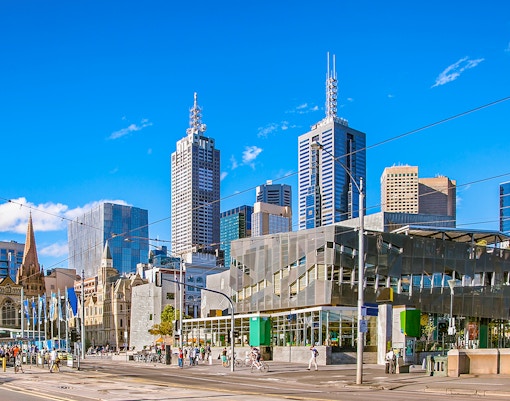
Federation Square is Melbourne’s civic heart, anchoring the CBD with galleries, cafés, and public events beside the Yarra River, and serving as a central meeting point steps from Flinders Street Station. Free entry.
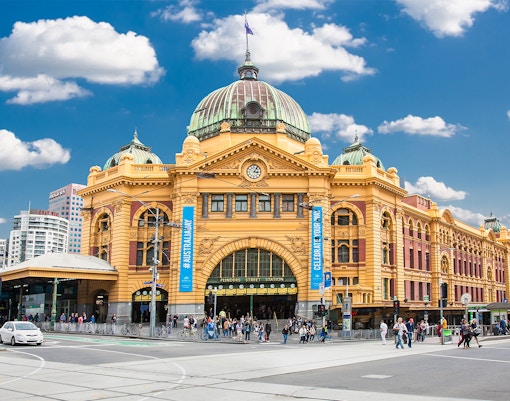
Flinders Street Station
Flinders Street Station is Melbourne’s most recognizable building, known for its grand clock façade and role as the city’s transport hub, connecting suburban rail lines and sitting opposite Federation Square. Free to enter.
Shrine of Remembrance
The Shrine of Remembrance honors Australia’s war service with a monumental stone structure, reflective spaces, and city views from the balcony, offering insight into national history and remembrance traditions. Free entry; guided tours ticketed.
Melbourne Cricket Ground (MCG)
The MCG is Australia’s most important sporting venue, hosting cricket, Australian rules football, and major events, with behind-the-scenes tours revealing locker rooms, media areas, and sporting history. Tour tickets are available to book online.
Museums
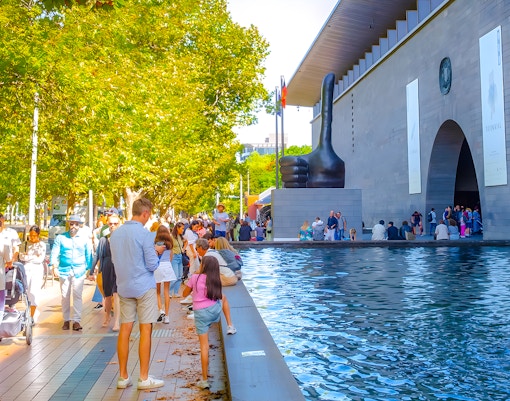
National Gallery of Victoria (NGV)
The National Gallery of Victoria houses international and Australian art across two major locations, with free permanent collections and rotating exhibitions that showcase global masters alongside contemporary works. You can book tickets for special exhibitions.
Melbourne Museum
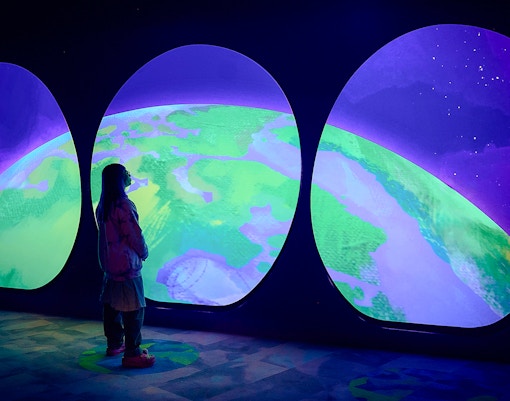
Melbourne Museum explores natural history, Indigenous culture, science, and design through large-scale exhibitions, interactive displays, and the iconic skeletons gallery, making it one of the city’s most informative indoor attractions. Ticketed entry required.
Australian Sports Museum
Located inside the MCG, the Australian Sports Museum uses interactive exhibits and multimedia displays to tell the story of Australia’s sporting culture, from cricket legends to Olympic moments. Ticketed entry required.
Religious Sites
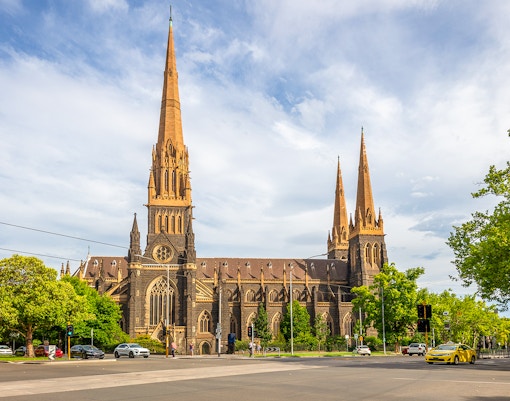
St Patrick’s Cathedral
St Patrick’s Cathedral is a Gothic Revival landmark with soaring spires, stained glass, and quiet interior spaces, offering a contrast to the surrounding CBD and insight into Melbourne’s Catholic heritage. Free entry; donations encouraged.
Abbotsford Convent
Abbotsford Convent is a former religious complex transformed into a creative precinct, blending historic chapels with studios, gardens, and cafés along the Yarra River. Free entry; events and exhibitions may be ticketed.
Green escapes
Royal Botanic Gardens Melbourne
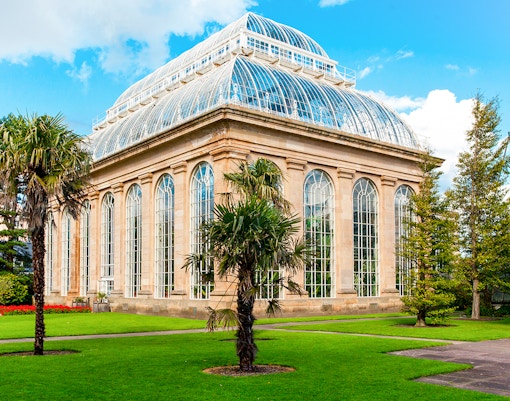
The Royal Botanic Gardens provide expansive lawns, lakes, and themed plant collections just south of the CBD, making it ideal for relaxed walks, picnics, and guided nature tours. Free entry; guided walks optional.
Carlton Gardens
Carlton Gardens surrounds the UNESCO-listed Royal Exhibition Building with formal lawns and tree-lined paths, offering a calm green space close to museums and the city’s northern edge. Free entry year-round.
Viewpoints
Melbourne Skydeck
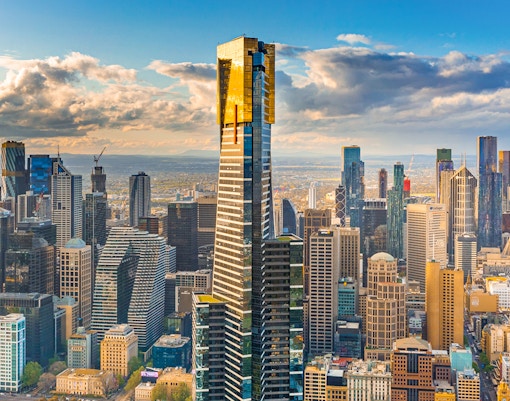
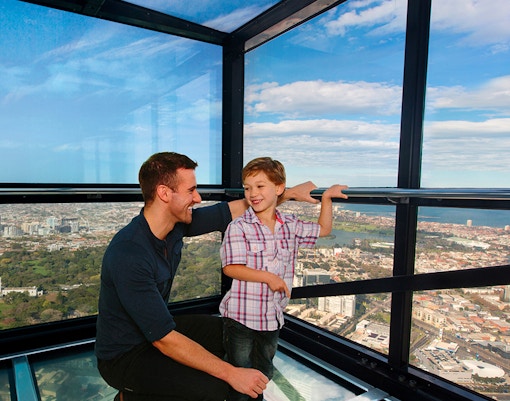
Melbourne Skydeck sits on the 88th floor of Eureka Tower, offering panoramic views across the city grid, Port Phillip Bay, and surrounding suburbs, with optional thrill experiences for visitors seeking something extra. Ticketed entry required.
Shrine Balcony
The Shrine balcony offers one of Melbourne’s best free viewpoints, looking back toward the CBD skyline across tree-lined avenues, and is especially striking at sunset or during city commemorations. Free access during opening hours.
Beachside & waterfront spots
St Kilda Beach
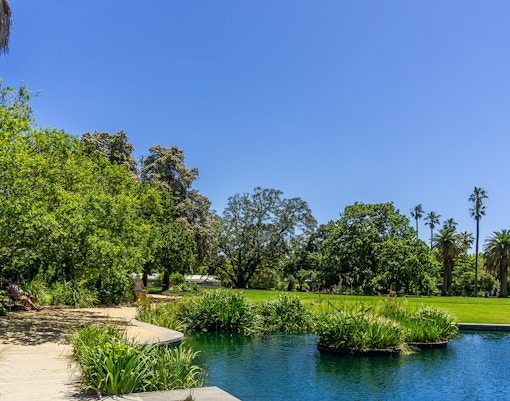
St Kilda Beach combines a long promenade, palm-lined paths, and nearby cafés, making it popular for sunset walks, cycling, and relaxed coastal time within easy tram reach of the city. Free access year-round.
Southbank Promenade
Southbank Promenade runs along the Yarra River with dining, arts venues, and city views, creating an easy waterfront walk between the CBD and cultural precincts. Free access; dining and shows ticketed separately.
Street markets
Queen Victoria Market
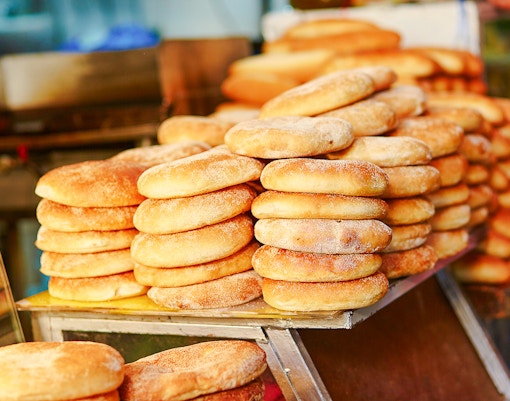
Queen Victoria Market is Melbourne’s largest open-air market, selling fresh produce, street food, souvenirs, and local goods, with a lively atmosphere that reflects the city’s multicultural character. Free entry; food and tours ticketed.
South Melbourne Market
South Melbourne Market focuses on gourmet food stalls, fresh produce, and specialty vendors, making it a favorite for lunch stops and edible souvenirs. Free entry; purchases extra.
Public plazas
State Library Forecourt
The State Library forecourt is a popular public square framed by historic architecture, often hosting gatherings, performances, and quiet reading breaks in the heart of the CBD. Free access throughout the day.
Birrarung Marr
Birrarung Marr is a riverside park and public space near Federation Square, offering open lawns, event areas, and pedestrian paths connecting the CBD with sports and entertainment venues. Free entry.
Your perfect 4-day Melbourne travel itinerary
Day 1 itinerary
Morning:
Start around 9:00 AM at Flinders Street Station, then walk to Federation Square to get oriented before crowds build. Continue on foot to the NGV International, arriving mid-morning when galleries are quieter. Allow about 1.5–2 hours.
Midday:
Walk 10 minutes to Southbank Promenade for lunch by the river, choosing a casual café or pub-style venue. After lunch, take a relaxed riverside stroll toward Princes Bridge.
Afternoon:
Cross into the Royal Botanic Gardens for shaded walks and lake views. This is a low-effort afternoon after travel, and entry is free. Spend about 90 minutes exploring the central garden paths.
Evening:
Head back toward the CBD by tram or a 25-minute walk. Have dinner in the Chinatown or Little Bourke Street area, then enjoy a quiet evening walk through the city grid to adjust to the pace.
Insider tip: Melbourne trams are free within the CBD, making Day 1 easy without tapping on.
Day 2 itinerary
Morning:
Begin at Queen Victoria Market by 9:00 AM for breakfast pastries or fresh juice before peak crowds. Spend time browsing food halls and souvenir stalls while it’s still manageable.
Midday:
Walk or tram 10 minutes to Carlton Gardens and visit the Melbourne Museum, allowing 2–3 hours. This is a good midday indoor block when crowds or heat increase.
Afternoon:
Stroll down Lygon Street for coffee or gelato, then browse independent shops nearby. The area is flat and walkable, making it an easy-paced afternoon.
Evening:
Take a tram to Fitzroy for dinner along Brunswick or Gertrude Street. Stay for live music or a relaxed bar visit before heading back to your accommodation.
Booking note: Museum tickets can be purchased on arrival, but special exhibitions may sell out on weekends.
Day 3 itinerary
Morning:
Head to St Kilda Beach by tram (about 30 minutes from the CBD). Walk the promenade, grab coffee near the beach, and explore the pier area at a relaxed pace.
Midday:
Lunch in St Kilda at a casual café or bakery, then tram back toward the city, stopping at Shrine of Remembrance. Allow time to walk the grounds and visit the balcony viewpoint.
Afternoon:
Continue to Melbourne Skydeck for panoramic city views. Visit mid-to-late afternoon for clearer visibility before sunset. Plan about 45 minutes.
Evening:
Dine along Southbank or near Arts Centre Melbourne, then attend a theatre performance, concert, or riverside evening walk.
If it rains / swap plan:
Replace St Kilda Beach with a longer morning at the NGV Australia (Ian Potter Centre) at Federation Square, which is fully indoors and centrally located.
Day 4 itinerary
Morning:
Join a guided walking tour of Melbourne’s laneways and street art around Hosier Lane and the CBD, starting around 10:00 AM. Tours last about 2 hours and provide local context.
Midday:
Have lunch near Hardware Lane or Degraves Street, choosing quick café-style dining. These areas are busy but atmospheric during lunch hours.
Afternoon:
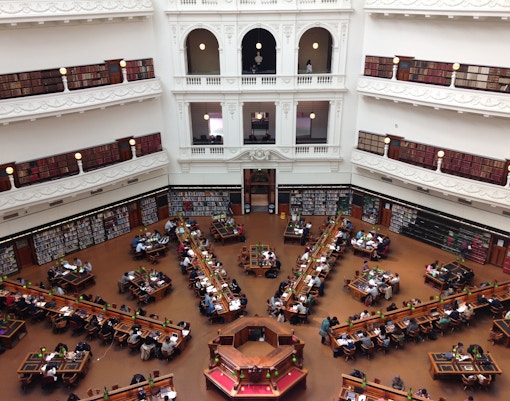
Visit the State Library of Victoria, exploring the reading rooms and exhibitions, then relax on the forecourt. This is an easy, no-cost afternoon with minimal walking.
Evening:
Finish your trip with dinner in South Yarra or Richmond, followed by a low-key bar or dessert stop. Both areas are well connected by train and tram for an easy return.
Insider tip: Weekday evenings feel calmer for dining in popular neighborhoods than Fridays or Saturdays.
How to get around in Melbourne
Melbourne has a well-integrated public transport network covering trams, trains, and buses, all using the same Myki ticketing system. Visitors can pay with a Myki card or digital Myki, and fares cap daily, making it easy to move around without overpaying.

- Best for: Fast travel between suburbs and longer distances across the city.
- Network & coverage: 16 lines serving over 220 stations across Melbourne and outer suburbs.
Hours & frequency: Runs roughly 5am–midnight, with peak services every 5–10 minutes. - Major sights connected: Flinders Street, Melbourne Museum, Richmond (MCG), St Kilda Road precinct, South Yarra.
- Fares & passes: AUD 5.50 for a 2-hour Zone 1+2 fare; AUD 11.00 daily cap on weekdays; AUD 7.60 on weekends and public holidays.
- Interchange: Myki fares apply across trains, trams, and buses within fare zones.
- Accessibility: Most stations offer step-free access, with lifts available at major CBD and suburban hubs.
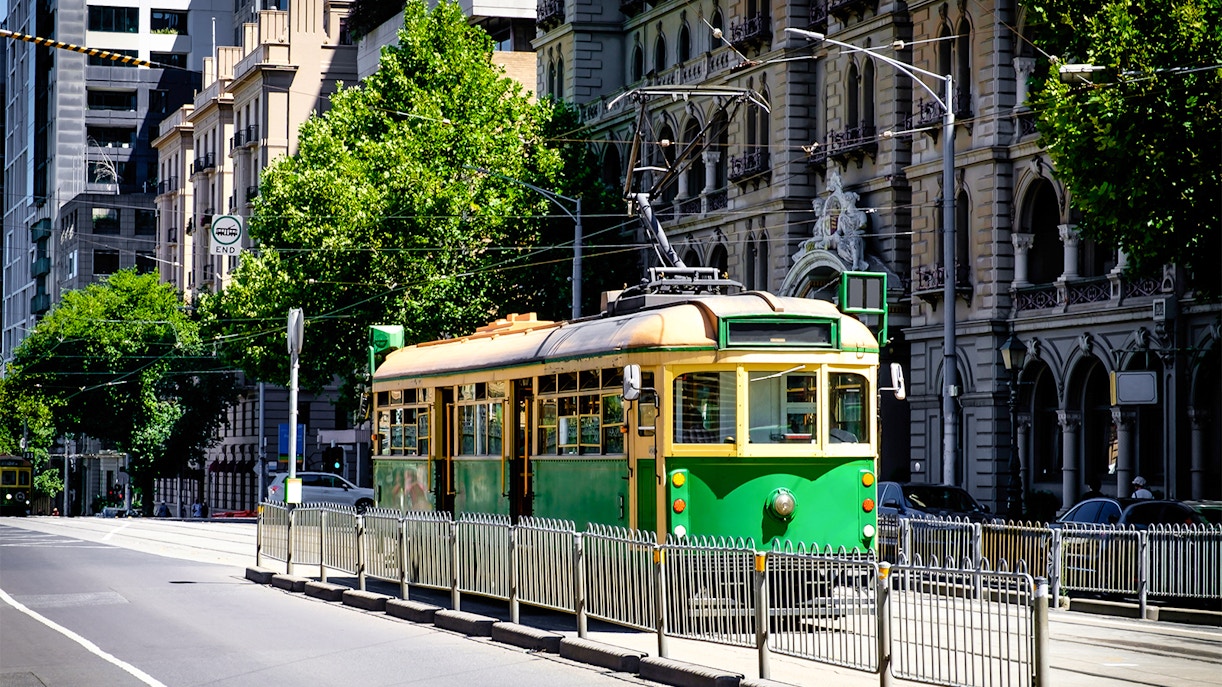
- Best for: Sightseeing and short trips within the city and inner suburbs.
- Network & coverage: World’s largest tram network with over 250 km of track across the CBD and inner neighborhoods.
- Hours & frequency: Operates from around 5am–midnight, with trams every 6–12 minutes on main routes.
- Major sights connected: Federation Square, Queen Victoria Market, St Kilda Beach, Carlton Gardens, Southbank.
- Fares & passes: Free within the CBD Free Tram Zone; outside the zone, fares match Myki pricing at AUD 5.50 for 2 hours.
- Interchange: Myki tickets work seamlessly when switching between trams, trains, and buses.
- Accessibility: Low-floor trams run on most routes, and all stops announce upcoming stations audibly.

- Best for: Reaching areas not covered by trains or trams.
- Network & coverage: Over 300 routes serving outer suburbs, residential areas, and industrial zones.
- Hours & frequency: Most routes run from 5am–midnight, with reduced frequency on weekends.
- Major sights connected: Melbourne Zoo, Scienceworks, Docklands, outer suburban attractions.
- Fares & passes: Myki fares apply at AUD 5.50 for a 2-hour Zone 1+2 journey, with daily caps in effect.
- Interchange: Bus journeys count toward the same Myki fare caps used on trains and trams.
- Accessibility: Most buses are wheelchair accessible with low floors and priority seating.
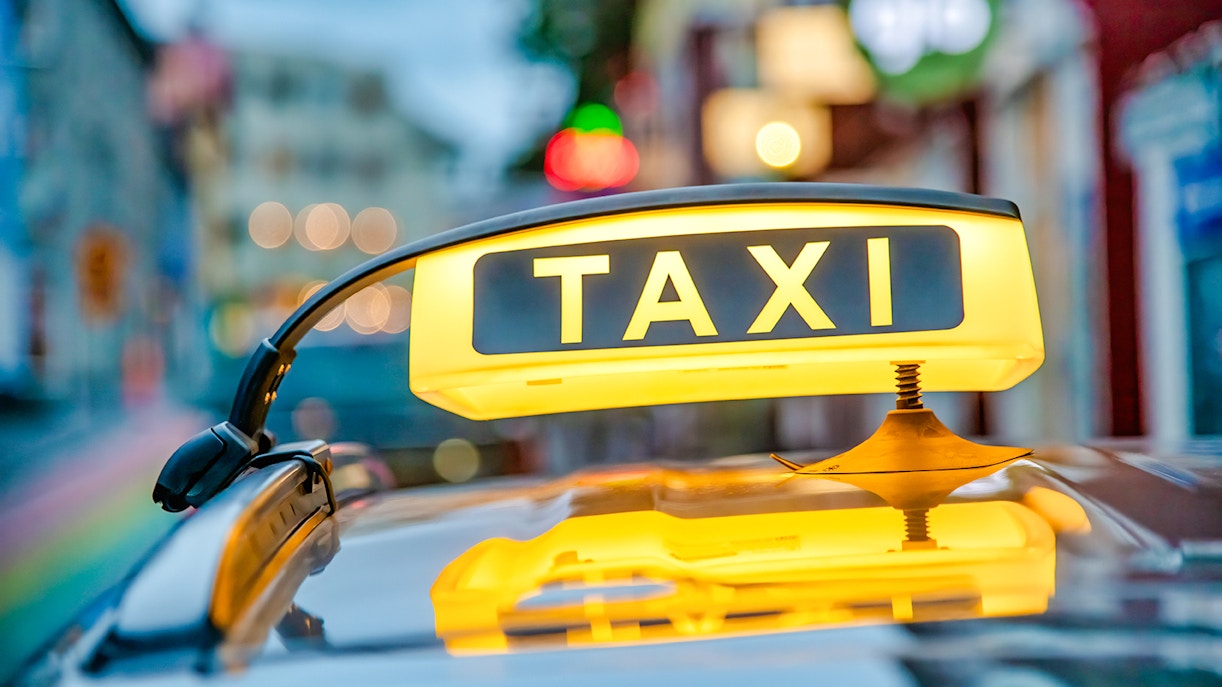
- Best for: Late-night travel or direct point-to-point journeys.
- Network & coverage: Widely available citywide, including suburbs and airports.
- Hours & frequency: Available 24/7, though wait times increase during major events.
- Major sights connected: All major districts, venues, and nightlife areas.
- Fares & passes: Typical CBD trips cost AUD 15–25; airport to CBD fares range from AUD 60–70 including tolls.
- Interchange: Not integrated with Myki or public transport passes.
- Accessibility: Wheelchair-accessible taxis are available but should be booked in advance.
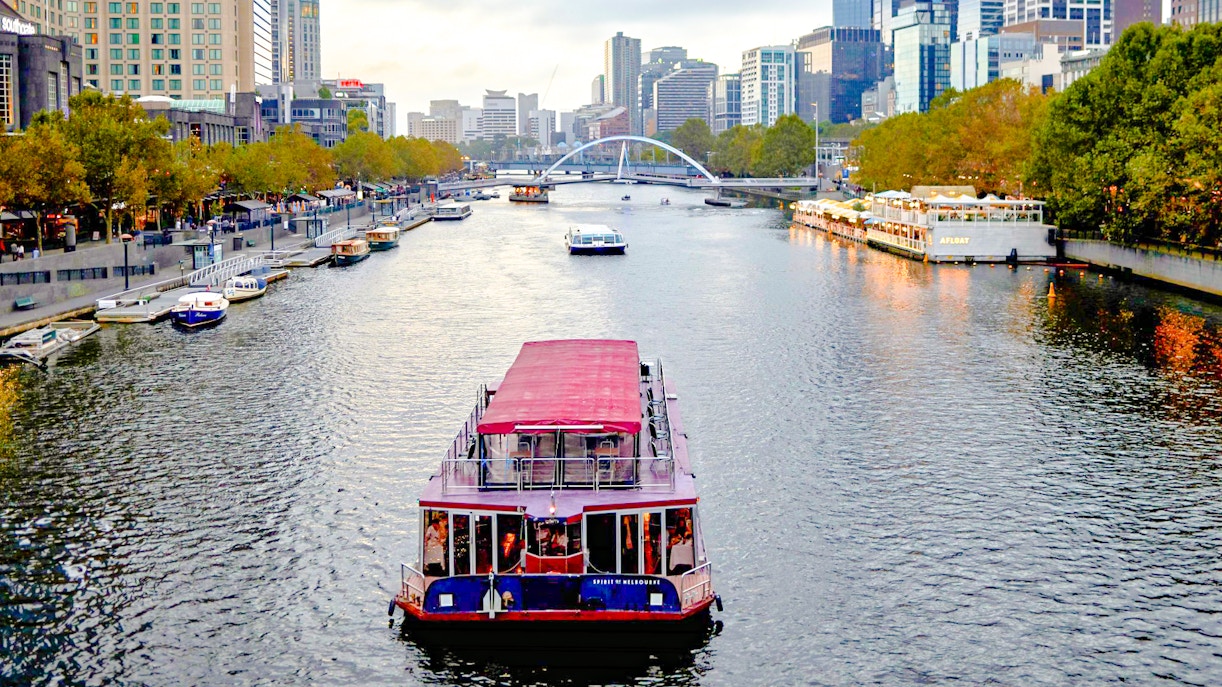
- Best for: Scenic travel and leisure trips rather than daily commuting.
- Network & coverage: Limited services along the Yarra River and Port Phillip Bay.
- Hours & frequency: Operates on limited schedules, often seasonal.
- Major sights connected: Southbank, Docklands, Williamstown.
- Fares & passes: River cruises start from around AUD 35 for short sightseeing routes.
- Interchange: Not included in Myki fares.
- Accessibility: Accessibility varies by operator, so check before booking.
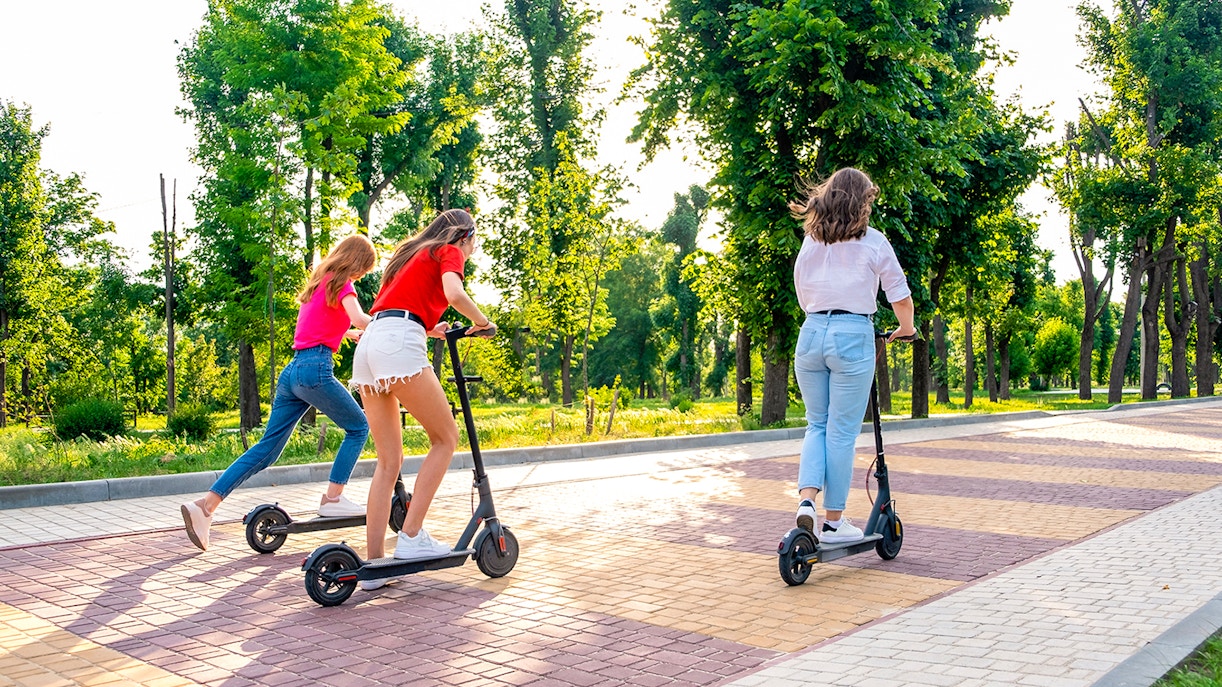
- Best for: Short distances and flexible city exploration.
- Network & coverage: Extensive bike lanes across the CBD and inner suburbs, plus shared paths along the river.
- Hours & frequency: Available 24/7 via app-based hire.
- Major sights connected: Yarra River Trail, Carlton Gardens, Southbank, Docklands.
- Fares & passes: Bike hire typically costs AUD 1 to unlock plus AUD 0.45 per minute, depending on provider.
- Interchange: Separate from public transport ticketing.
- Accessibility: Not suitable for all travelers; helmets are legally required.
Exploring Melbourne with kids
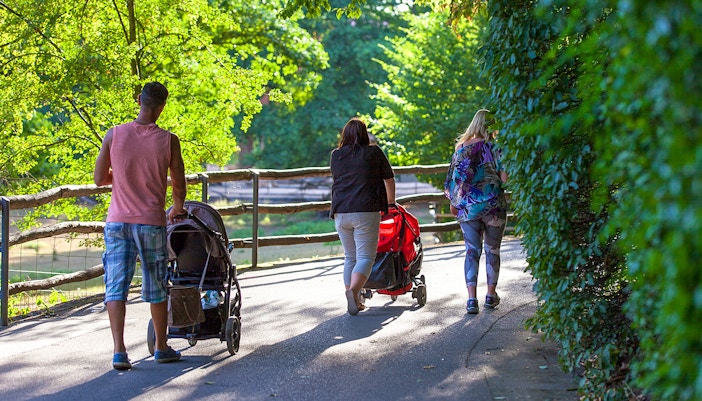
Babies & toddlers
- Melbourne’s CBD is largely flat, making it easy to navigate with strollers, especially around Federation Square, Southbank, and the Royal Botanic Gardens.
- Major attractions like Melbourne Museum and NGV offer baby-changing facilities and quiet indoor spaces for feeding breaks.
- Cafés are generally child-friendly, with high chairs common and flexible seating.
- Trams and trains accommodate strollers, but peak commuter hours can feel crowded.
- Plan outings earlier in the day, as afternoons can be busy and weather may change quickly.

Younger kids (Ages 4 to 11)
- Interactive attractions such as Melbourne Museum, Scienceworks, and SEA LIFE Aquarium combine learning with hands-on exhibits.
- Open spaces like Carlton Gardens and Birrarung Marr allow kids to run around between sightseeing stops.
- Many museums offer free or discounted entry for children, helping manage costs.
- Booking popular attractions in advance helps avoid queues, especially on weekends.
- Food courts, markets, and casual cafés offer familiar options that suit picky eaters.

Older kids
- Active experiences like bike rides along the Yarra, beach time in St Kilda, or sports-focused visits to the MCG appeal to older kids.
- Street art walks and pop-culture exhibitions resonate well with creative or tech-savvy teens.
- Public transport makes it easy for families to move independently without long walks.
- Shopping districts such as Melbourne Central and Chapel Street suit browsing-oriented teens.
- Evening activities like live sports or outdoor cinema feel age-appropriate without being overwhelming.
Travelling solo in Melbourne
- Melbourne’s CBD, Carlton, Fitzroy, and Southbank are safe and well-lit for solo exploration during the day and early evening.
- Trams and trains run late on weekends, making it easier to get back to accommodation after dinner or events.
- Hostels, co-living spaces, and cafés in Fitzroy and the CBD double as social hubs for meeting other travelers.
- Early mornings suit photo walks through laneways and markets before crowds arrive.
- Daily transport caps and free tram zones help keep solo budgets predictable.
- Walking tours, food tastings, and small-group classes offer easy social interaction without commitment.
- Standard precautions apply late at night, especially around nightlife-heavy areas.
- Dining alone is common, particularly at cafés, food halls, and bar seating.
Where to stay in Melbourne

Melbourne CBD
Melbourne’s CBD is the most convenient base for first-time visitors who want walkable access to major sights, dining, and public transport. You’ll find everything from budget hostels to luxury high-rises, plus easy access to trams, trains, and the Free Tram Zone. Staying here puts Federation Square, the NGV, Queen Victoria Market, and Southbank within minutes. The main advantages are connectivity and time savings, especially for short trips. The downside is noise, particularly on weekends, and higher prices for central hotels. Dining options range from casual laneway cafés to late-night eateries, making solo and short-stay travel easy. Expect busy streets during office hours and evenings, with a lively but urban feel rather than neighborhood calm.
Fitzroy
Fitzroy suits travelers drawn to Melbourne’s creative side, with street art, independent boutiques, live music venues, and relaxed dining. Accommodation skews toward boutique hotels, serviced apartments, and guesthouses rather than large chains. Brunswick Street anchors the area, offering vintage shopping, casual bars, and diverse food options. Fitzroy feels social and expressive, making it popular with younger travelers and creatives. The trade-off is slightly longer travel times to the CBD, though trams make the commute straightforward. Noise levels can be higher at night near bars, but streets quieten away from main strips. Expect a more local experience with strong café culture and less corporate polish than the city center.
Southbank
Southbank appeals to travelers who want river views, cultural venues, and modern hotels within walking distance of the CBD. The area hosts mid-range to luxury hotels, serviced apartments, and dining along the Yarra River. It’s ideal for couples and short stays focused on galleries, theatre, and dining. Major attractions like Arts Centre Melbourne and the NGV are close by, and trams connect easily to the city grid. The main downside is that Southbank can feel polished and touristy, with less neighborhood character after dark. Prices are higher for river-facing rooms, and nightlife is calmer than other areas, favoring evening walks over late-night bars.
St Kilda
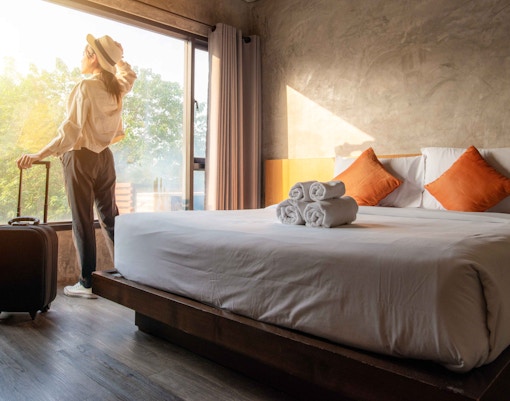
St Kilda is best for travelers who want beach access, open space, and a relaxed pace while staying connected to the city. Accommodation ranges from budget hostels to mid-range hotels, often offering better value than the CBD. The area works well for longer stays, families, and travelers who enjoy morning walks along the promenade. Trams reach the CBD in about 30 minutes. The trade-offs include fewer major attractions nearby and a quieter weekday atmosphere. Dining is casual and local, with bakeries, cafés, and neighborhood pubs dominating the scene. Expect a laid-back vibe with more space and less rush than inner-city areas.
Price ranges by zone
AUD 35–70/night (hostels/shared stays), AUD 150–280/night (mid-range hotels), AUD 350+/night (luxury and river-view stays)
Neighborhood walks & hidden gems
Walking routes
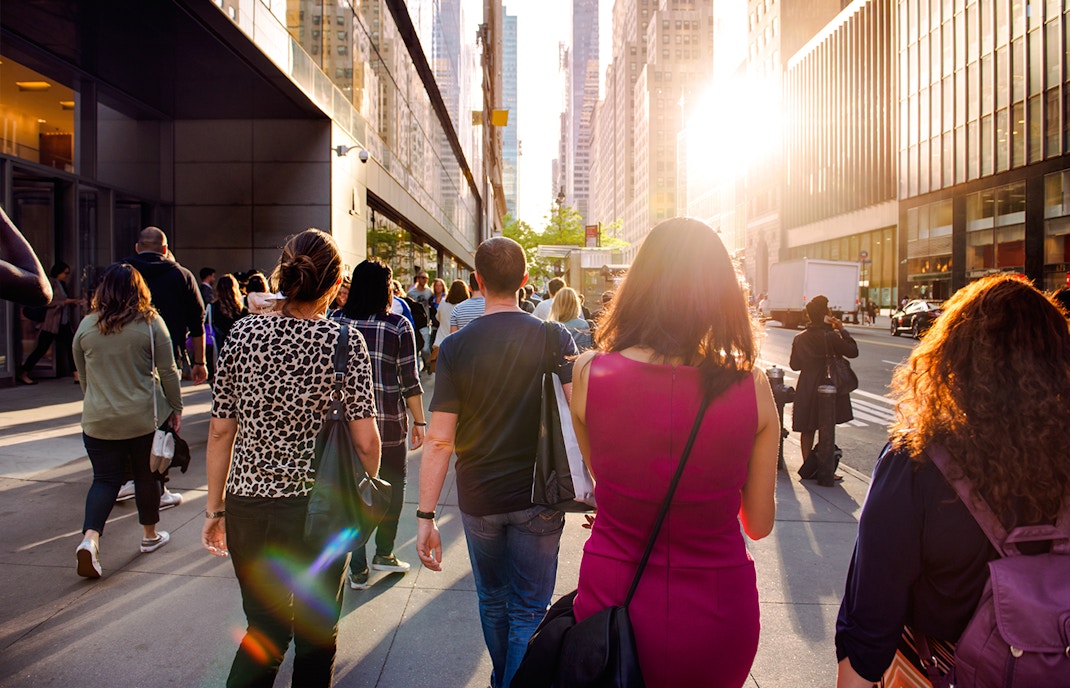
Walking route 1: Laneways to Libraries
Start: Federation Square → Hosier Lane → Degraves Street → Block Arcade → State Library of Victoria → End: Carlton Gardens
Distance: ~2.5 km
Anchors: Street art, historic arcades, independent cafés, public squares, heritage architecture, green spaces
Walking route 2: River to Gardens
Start: Southbank Promenade → Princes Bridge → Shrine of Remembrance → Royal Botanic Gardens → End: Tan Track
Distance: ~3 km
Anchors: Riverfront walks, skyline views, memorial spaces, landscaped gardens, walking trails, quiet lookouts
Hidden gems
- Nicholas Building: A historic arcade filled with working artist studios, vintage shops, and stairwell cafés that reveal Melbourne’s creative side behind an unassuming façade.
- Hellenic Museum Courtyard: A peaceful inner-city courtyard housed in a former mansion, offering a quiet break near Parliament without the crowds of larger museums.
- Collingwood Children’s Farm: An unexpected pocket of open space with animals, gardens, and river paths that feels far removed from the city despite its inner-suburb location.
- ACMI Mediatheque: A low-key viewing space inside ACMI where visitors can watch Australian and international film and television at their own pace.
- Melbourne General Cemetery: A calm, walkable space with historic graves and wide paths, offering perspective on the city’s past beyond central tourist routes.
Food, drink & nightlife
Melbourne’s food scene reflects its multicultural population, blending European café traditions with strong Asian, Middle Eastern, and Mediterranean influences. Dining is casual and quality-driven, with breakfast and coffee taken as seriously as dinner. Locals eat out frequently, favoring neighborhood cafés, shared plates, and seasonal menus over formal dining rituals.

- Flat white: A smooth espresso-based coffee with lightly textured milk, best tried in CBD laneways or Fitzroy cafés.
- Avocado toast: A Melbourne brunch staple, often topped with feta or chili, widely available in Carlton and South Yarra.
- Meat pie: A classic Australian savory pastry, best from bakeries or the Queen Victoria Market.
- Barramundi: A locally sourced fish, usually grilled or pan-fried, commonly found in modern Australian restaurants.
- Lamington: A sponge cake coated in chocolate and coconut, available at bakeries and markets.
- Dim sim: A Melbourne-born snack inspired by Chinese dumplings, found at markets and takeaway shops.
- Pavlova: A meringue dessert topped with fruit, more common around holidays and celebrations.
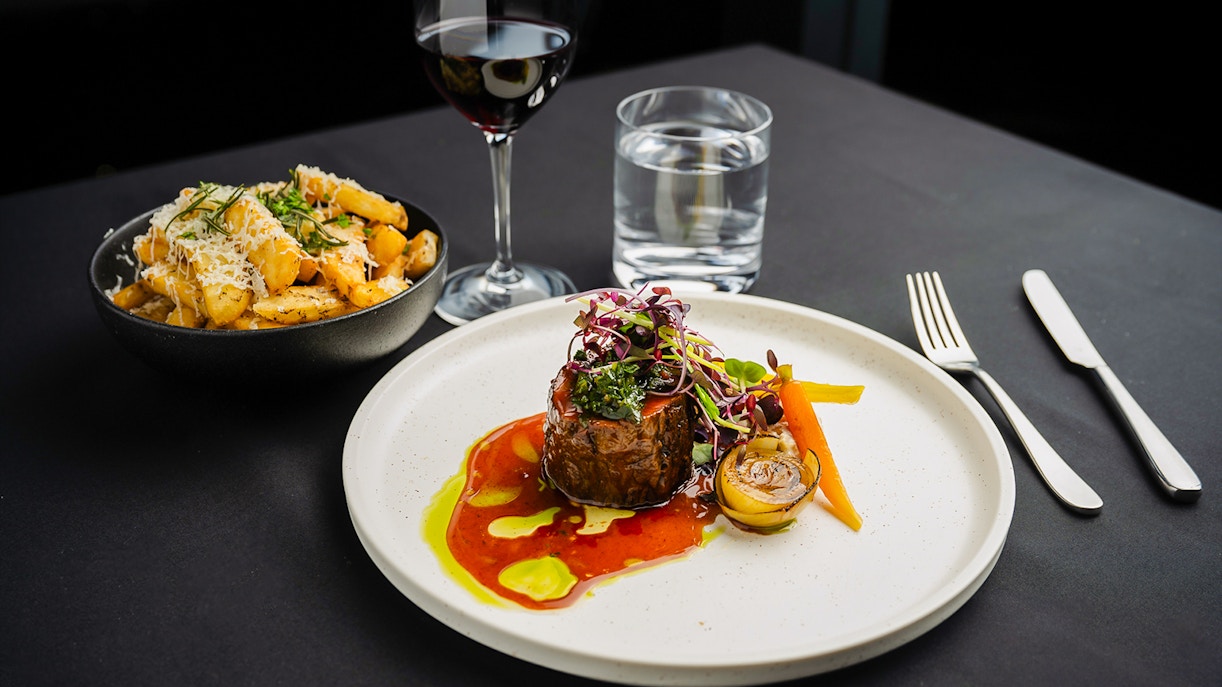
- Pellegrini’s Espresso Bar (CBD): A no-frills Italian café serving classic pasta and coffee in a fast-paced, old-school setting.
- Proud Mary Coffee (Collingwood): A specialty café known for carefully sourced beans and detailed brew methods.
- Chin Chin (CBD): A lively Thai-inspired restaurant offering share plates and bold flavors at mid-range prices.
- South Melbourne Market Food Hall (South Melbourne): A mix of casual stalls serving seafood, baked goods, and multicultural lunches.
- Cumulus Inc. (Flinders Lane): A relaxed modern Australian restaurant popular for both long lunches and early dinners.
- The Lincoln (Carlton): A neighborhood pub serving seasonal Australian food with a strong local following.
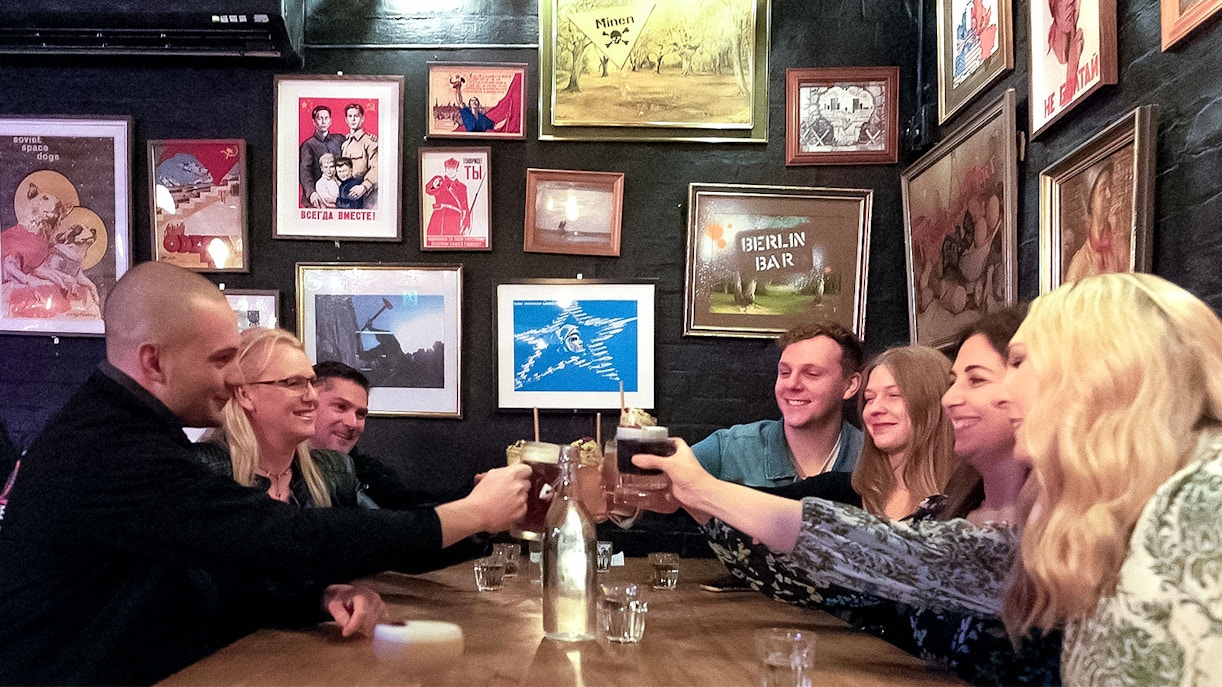
- Fitzroy & Collingwood: Known for live music venues, casual bars, and late-night eateries with a creative crowd.
- CBD Laneways: Cocktail bars and hidden basements dominate, often with small spaces and walk-in-only entry.
- St Kilda: A mix of pubs, live music venues, and relaxed nightlife near the beach.
- Southbank: More polished venues suited to pre-theatre drinks and quieter evenings.
- Chapel Street (South Yarra): Busy bars and clubs with later nights, especially on weekends.
- Late-night food is easiest to find in the CBD and Fitzroy, with cafés and takeaway spots open well past midnight.
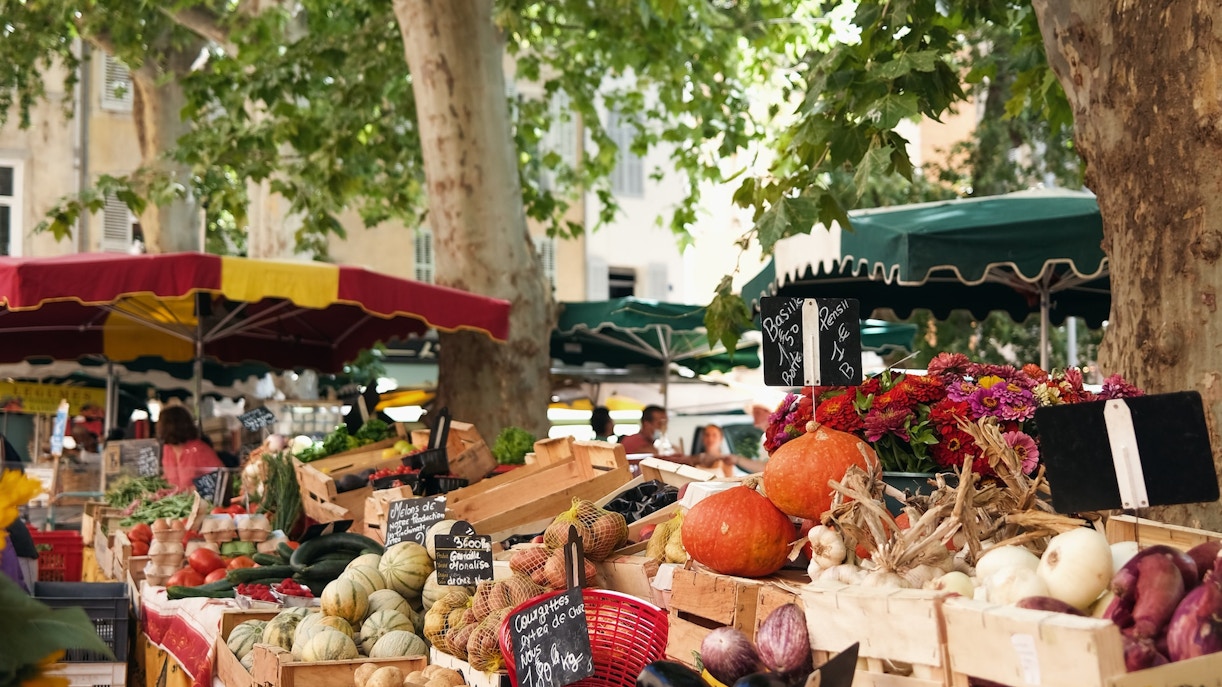
Queen Victoria Market (CBD):
Melbourne’s largest and most iconic food market, known for fresh produce, bakeries, specialty groceries, and ready-to-eat street food. Visit in the morning for calmer browsing or in the evening during seasonal night markets for a social, food-led experience.
South Melbourne Market (South Melbourne):
A compact, food-first market popular with locals for lunch, offering dim sims, seafood, baked goods, and gourmet sandwiches. It’s less touristy than Queen Vic and ideal if you want a focused, quality-driven market stop.
Queen Victoria Night Market (Seasonal):
Held weekly during warmer months, this evening market transforms the space into a street food and music hub. Expect global food stalls, shared tables, and crowds; arrive early to avoid long queues and use public transport.
Where to shop
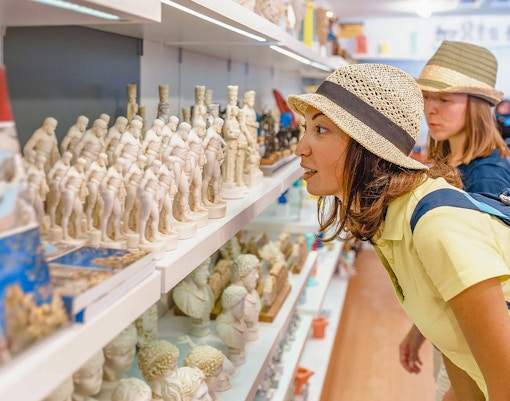
Souvenirs
Find reliable Australian-made souvenirs at Queen Victoria Market and museum gift shops, where you’ll see locally produced food items, skincare, and Indigenous-designed gifts.

Books
Independent bookstores cluster around Carlton and the CBD, especially near universities and cultural institutions, offering strong selections in Australian fiction, art, and travel writing.

Art prints
Browse artist-run shops and small galleries in Fitzroy and Collingwood, where screen prints, photography, and illustration reflect Melbourne’s creative scene.
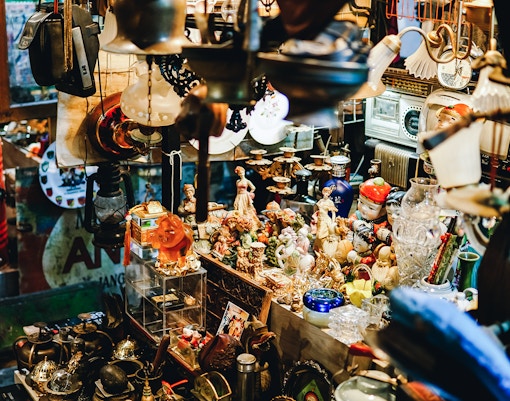
Vintage
Brunswick Street and Smith Street are the city’s vintage hubs, packed with curated secondhand clothing stores ranging from affordable finds to high-end retro pieces.

Clothing
For Australian and international fashion, head to Bourke Street Mall and Melbourne Central, while Chapel Street offers trend-driven boutiques and independent designers.
Accessibility features
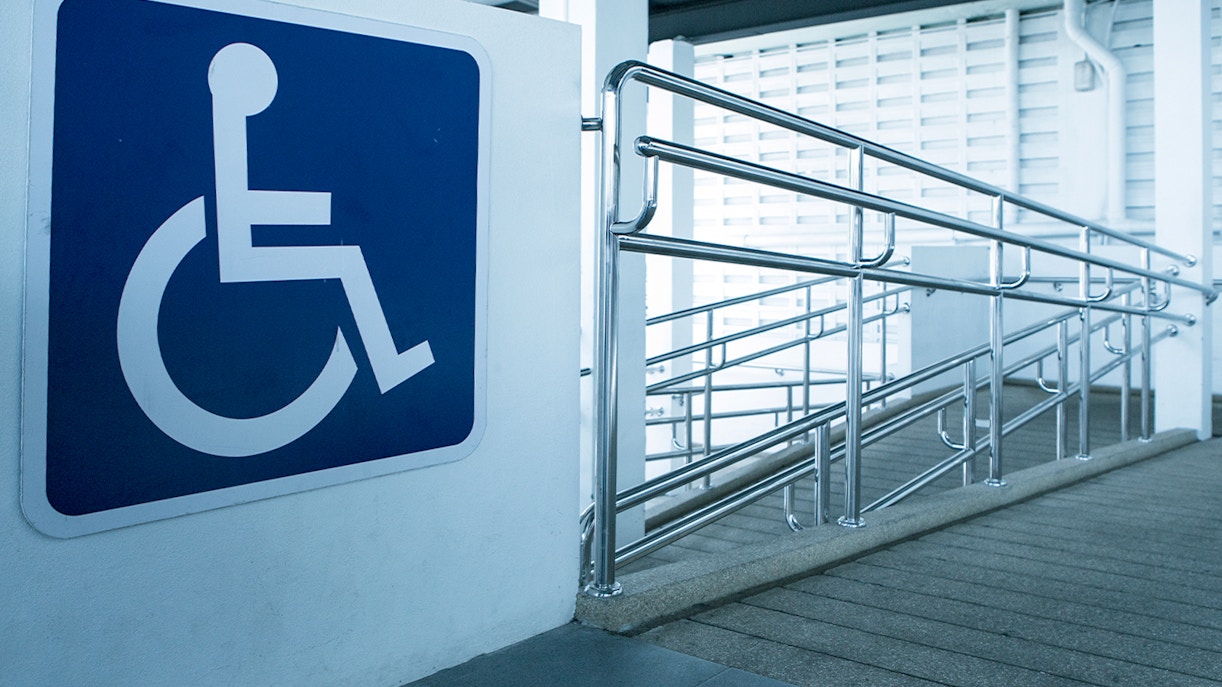
Public transport: Melbourne’s public transport system offers improved accessibility, especially in the CBD and inner suburbs. Major stations have staffed ticket desks and lifts, and most newer trams and buses are low-floor with priority seating. Real-time planning and accessibility filters are available through the PTV app. Staff assistance is available at central stations, though some older suburban stations still lack step-free access.
Attractions: Melbourne’s major attractions provide step-free entry, accessible restrooms, and ramps, including the NGV, Melbourne Museum, and SEA LIFE Aquarium. Audio guides and captioned content are increasingly common, though availability varies by exhibition. Some venues require advance notice for wheelchair access or assisted entry, so booking ahead helps ensure smooth access.
Resources
- Public Transport Victoria (PTV): Official transport body with accessibility maps and service updates
- Visit Victoria – Accessible Travel: State tourism resource with accessibility planning guides
- Travellers Aid Australia: Support services at major stations, including mobility equipment hire
Exploring Melbourne on a budget

Average daily costs
- Melbourne is manageable on a budget if you plan around accommodation and transport caps.
- Public transport costs are predictable thanks to daily fare limits.
- Food prices vary widely, but casual meals are easy to find across the city.
- Hostel double room: AUD 70–120 per night
- Mid-range hotel: AUD 180–280 per night
- Daily transport cap: AUD 11.00 (AUD 7.60 weekends)
- Coffee: ~AUD 5.00
- Dinner for two (casual): AUD 60–90
- Beer/pint: AUD 10–14
- Major attraction ticket: AUD 35–45

Book early to save
- Booking ahead makes the biggest difference during Melbourne’s peak event periods.
- Flights and hotels sell out quickly during summer, major sports events, and festivals.
- Early bookings also give you better neighborhood choice, not just lower prices.
- Flights & hotels: Book 3–6 months ahead for summer and event weeks
- Savings: Early hotel bookings can save 20–30% in the CBD and Southbank
- Attractions: Popular exhibitions and events are cheaper online than at the door

Free & low-cost experiences
- Melbourne offers many high-quality attractions that cost nothing to enter.
- Free sights are concentrated in the CBD and easy to reach by tram.
- Mixing free stops with ticketed attractions keeps daily spend low.
- Walk the CBD laneways early for street art and architecture
- Visit the NGV permanent collections, which are always free
- Relax in the Royal Botanic Gardens or Carlton Gardens
- Use the Free Tram Zone to explore without transport costs
- Spend time at the State Library of Victoria and its exhibitions
- Check Federation Square for free public events and screenings
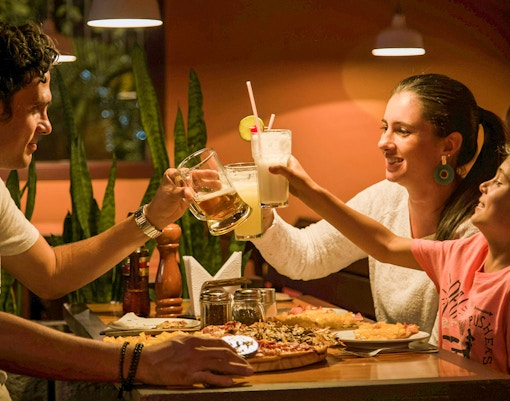
Cheap eats
- Eating well in Melbourne doesn’t require restaurant dining every night.
- Markets, food courts, and casual strips offer the best value.
- Lunch is usually cheaper than dinner at the same venues.
- Queen Victoria Market: Street food and bakery items under AUD 15
- CBD food courts: Asian and Middle Eastern meals for AUD 12–18
- Brunswick Street (Fitzroy): Casual cafés and takeaway spots with good portions
- Lygon Street (Carlton): Affordable Italian lunches away from peak hours
- South Melbourne Market: Filling market meals without restaurant pricing
Apps and tools
- Public Transport Victoria (PTV): The official transport app shows routes, timetables, service changes, and accessibility information, making it essential for planning tram, train, and bus journeys across Melbourne.
- Citymapper: A real-time navigation app that combines public transport, walking, cycling, and ride-hail options, helping visitors choose the fastest route during peak hours or service disruptions.
- Google Maps (Offline): Download offline maps of Melbourne to navigate laneways, suburbs, and walking routes without mobile data, especially useful in areas with poor reception.
- Uber: Widely used across Melbourne for quick point-to-point trips, airport transfers, and late-night travel when public transport frequency drops.
- DoorDash: A popular food delivery app offering access to cafés, restaurants, and takeaway spots citywide, useful for nights in or rainy evenings.
- Visit Victoria App: The official tourism app highlights attractions, events, itineraries, and nearby experiences, helping travelers discover what’s happening during their stay.
- Google Translate: Helpful for translating menus, signage, and conversations when visiting multicultural neighborhoods or interacting with non-native English speakers.
Tips to best explore Melbourne
Money matters
- Credit and debit cards are accepted almost everywhere, including cafés, markets, and public transport top-ups.
- Carry a small amount of cash (AUD 20–50) for niche vendors, though it’s rarely essential.
- ATMs are widespread, but international cards may incur foreign transaction fees.
Ideal duration
- 3 days covers Melbourne’s main attractions, food scene, and neighborhoods.
- 4–5 days allows for museums, beach time, and a slower pace.
- 6+ days suits travelers adding one or two day trips beyond the city.
Safety & scams
- Melbourne is generally safe, especially in the CBD and inner suburbs.
- Watch for pickpocketing in crowded areas and late-night bar districts.
- Use licensed taxis or trusted ride-hail apps at night.
Cultural norms
- Dress is casual across the city, with smart-casual common for dining out.
- Queueing is expected at cafés, public transport, and attractions.
- Dining is relaxed, and splitting bills is widely accepted.
Mobility tips
- Wear comfortable shoes, as Melbourne is very walkable.
- The Free Tram Zone doubles as sightseeing transport within the CBD.
- Walking between nearby sights often beats short tram hops.
Local swaps
- Instead of Bourke Street Mall, try Brunswick Street for independent shops.
- Instead of St Kilda on weekends, try Brighton Beach for more space.
- Instead of CBD dinner hotspots, try Richmond for better value and fewer crowds.
Responsible tourism
- Use refill stations instead of bottled water.
- Support local cafés, markets, and independent businesses.
- Respect public spaces, especially memorials and cultural sites.
Popular day trips from Melbourne
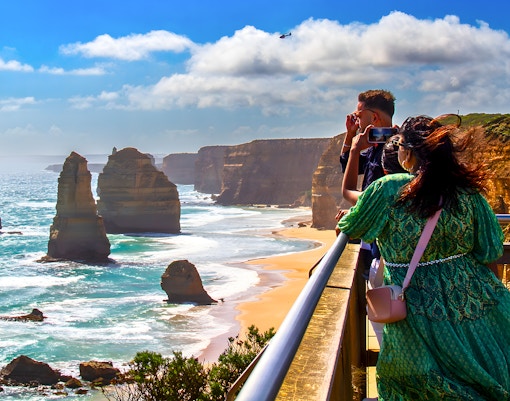
Great Ocean Road
🚗 1.5–2 hours by car
This scenic coastal drive features dramatic cliffs, beaches, and the Twelve Apostles. It’s best visited in spring or fall, and guided tours save driving fatigue.
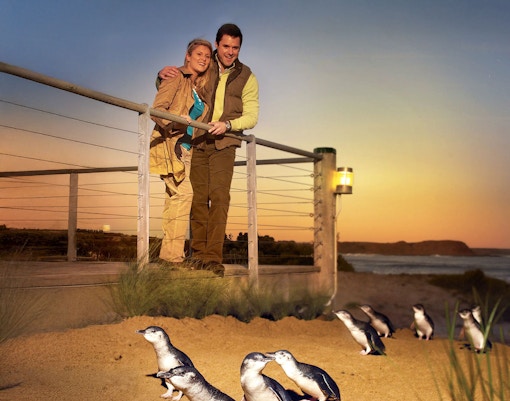
Phillip Island
🚗 2 hours by car
Famous for the Penguin Parade and coastal wildlife, Phillip Island is best visited year-round, with evening bookings essential for penguin viewing.

Yarra Valley
🚗 1–1.5 hours by car
Known for wineries, gourmet food, and rolling vineyards, the Yarra Valley suits food and wine lovers. Book tastings in advance, especially on weekends.

Mornington Peninsula
🚗 1.5 hours by car
A relaxed region of beaches, hot springs, and coastal walks, best suited to summer visits. Booking spa sessions ahead is strongly recommended.
Frequently Asked Questions About Traveling To Melbourne
Melbourne has many restaurants and cafes that offer the best cuisines from across the world. You should also visit beaches and have picnics. There are many buildings in Melbourne that you must see.
A 7-day trip to Melbourne for a single person will cost around €1709. The prices will increase or decrease, depending on your stay, choice of restaurants, and preferred mode of commute.
Melbourne Aquarium, Federation Square, Eureka Tower, Royal Exhibition Building, Old Melbourne Gaol, Brighton Beach, Melbourne Cricket Ground and Museum, Penguin Parade, Dandenong Ranges, and St. Kilda Beach are some must-visit places in Melbourne.
Melbourne experiences spring from March to May and autumn from September to November. These are the best months to visit Melbourne as the weather is pleasant in these months.
Don’t tip in restaurants. If you are very happy with the service, just ask the cashier to keep the change. To avoid accidents at the beach, swim between the red and yellow flags.