How to visit Ballarat Wildlife Park
Ballarat Wildlife Park is a family-run wildlife park best known for its free-roaming kangaroos, close-up koala encounters, and unusually tactile feel. It’s compact enough to walk in under 90 minutes, but that usually leads to a rushed visit because the best parts depend on timing keeper talks, feeding windows, and one or two slower stops. The biggest difference between a flat visit and a great one is arriving early, before the kangaroos settle into shade and the midday crowds build. This guide covers timing, entrances, tickets, and the route that makes the park work.
Quick overview: Ballarat Wildlife Park at a glance
This is the fast version if you want to decide when to go, how long to stay, and whether any upgrade is worth it.
- When to visit: Daily, 9am–5pm; closed on December 25. The first 60–90 minutes after opening are noticeably calmer than 12 noon–2pm, because the kangaroos are more active, and the billabong and café area haven’t filled with stroller traffic yet.
- Getting in: From A$37.80 for standard entry online. Tiger and koala encounters start from A$99 and A$55. General admission usually stays available, but tiger and meerkat encounters can sell out on school-holiday days and summer weekends.
- How long to allow: 2.5–3.5 hours for most visitors. It stretches toward 4–5 hours if you stay for multiple keeper talks, lunch, and a paid encounter.
- What most people miss: The Tasmanian devils, tree kangaroos near the entrance, and the Reptile House all get skipped by people who spend too long in the kangaroo paddock early on.
- Is a guide worth it? Not really in the usual tour sense; the included keeper talks add most of the context you need, while paid encounters are worth it only if you want a guaranteed close-up moment or photo.
- 🎟️ Tiger and meerkat encounter slots for Ballarat Wildlife Park often sell out several days ahead during school holidays and summer weekends. Lock in your visit before the time you want is gone. See ticket options
Jump to what you need
🕒 Where and when to go
🗓️ How much time do you need?
🎟️ Which ticket is right for you?
🗺️ Getting around
🦘 Which animals to prioritise
♿ Facilities and accessibility
Where and when to go
How do you get to Ballarat Wildlife Park?
Ballarat Wildlife Park is in Ballarat East, about 3km from Ballarat Station and roughly 110km west of Melbourne CBD, so it’s easiest by car but still manageable by train plus a short transfer.
250 Fussell Street, Ballarat East, VIC 3350, Australia
→ Open in Google Maps
- Train + bus: Ballarat Station → Bus 20 connection → short walk from the nearest stop → good budget option if you time the transfer well.
- Train + rideshare: Ballarat Station → Uber/taxi pick-up → about 10 minutes to the gate → usually the simplest fallback if you miss the hourly bus.
- Car: Western Freeway route from Melbourne CBD → about 90 minutes → easiest option if you’re pairing the park with Sovereign Hill.
- Parking: On-site parking is free → usually ample → busiest on school-holiday mornings and sunny weekends.
Full getting there guide
Getting here from nearby cities
The park works as a regional day trip from Melbourne and Geelong, and it’s also a practical first stop for visitors arriving into Victoria by air and heading west.
From Melbourne CBD
- Distance: 110km
- Travel time: About 90 minutes by car or V/Line train plus bus transfer
- Time to budget: Realistically leaves you half a day at the park if you’re returning the same day
From Melbourne Airport
- Distance: 100km
- Travel time: About 60 minutes by car via the Western Freeway
- Time to budget: Best if you’re driving, because public-transport changes eat into park time
From Geelong
- Distance: 90km
- Travel time: About 75 minutes by car
- Time to budget: Easy as a half-day wildlife stop if you’re already road-tripping through regional Victoria
Which entrance should you use?
There’s one main entrance, but visitors slow themselves down by joining the on-the-day purchase line when they could already be inside buying kangaroo feed and heading to the paddock.
- Pre-booked tickets: For visitors who already have admission or encounter bookings. Expect 0–10 minutes during most mornings.
- On-the-day tickets: For walk-up visitors buying at the booth. Expect 10–20 minutes during school holidays and sunny weekends.
- Encounter check-in: For koala, meerkat, and tiger guests. Expect 5–10 minutes if you arrive 10–15 minutes before your slot.
Full entrances guide
When is Ballarat Wildlife Park open?
- Monday–Sunday: 9am–5pm
- December 25: Closed
- Café hours: 10am–3:30pm
- Last entry: 4:30pm
When is it busiest? Weekends, school holidays, and the 12 noon–2pm keeper-talk window are the busiest, with the billabong paths and café area feeling the most congested.
When should you actually go? Arrive for opening, especially on Sundays or winter weekdays, if you want active kangaroos, easier photos, and quieter reptile and koala viewing before the park warms up.
💡 Pro tip: If feeding kangaroos is your priority, don’t drift into the reptile or predator zones first — head straight to the central grasslands at opening, when the animals are still active and the best photo light hasn’t flattened out.
How much time do you need?
| Visit type | Route | Duration | Walking distance | What you get |
|---|---|---|---|---|
Highlights only | Entry → kangaroo paddock → koalas and tree kangaroos → Crunch’s lagoon → tiger sanctuary → exit | 1.5–2 hours | ~1.5km | You’ll cover the signature species and get the classic kangaroo photos, but you’ll likely skip the Reptile House, Tasmanian devils, and most keeper talks. |
Balanced visit | Entry → kangaroo paddock → koalas → Reptile House → penguins and meerkats by talk times → Crunch → Tasmanian devils → tiger sanctuary → exit | 2.5–3.5 hours | ~2.5km | This is the best fit for most visitors because it adds keeper talks and the darker indoor exhibits without turning the visit into a full-day commitment. |
Full exploration | Entry → morning kangaroo feed → all key keeper talks → koalas → Reptile House and nocturnal area → predators → café break → Tasmanian devils → final tiger or devil talk → exit | 4–5 hours | ~3km | You’ll get the richest version of the park, plus time for lunch and one paid encounter, but it becomes a long day for younger children by mid-afternoon. |
Which Ballarat Wildlife Park ticket is best for you
| Ticket type | What's included | Best for | Price range |
|---|---|---|---|
General Admission | Park entry + keeper talks + free-roaming kangaroo area + all standard exhibits | A first visit where you want the full park without committing to a fixed encounter time | From A$37.80 |
Family Pass | Entry for 2 adults + 4 children | A longer family visit where separate tickets add up faster than the experience changes | From A$100 |
Koala Encounter | Koala pat and pose + 1 digital photo + separate admission required | A visit where the main goal is a close-up koala photo rather than just standard viewing | From A$55 |
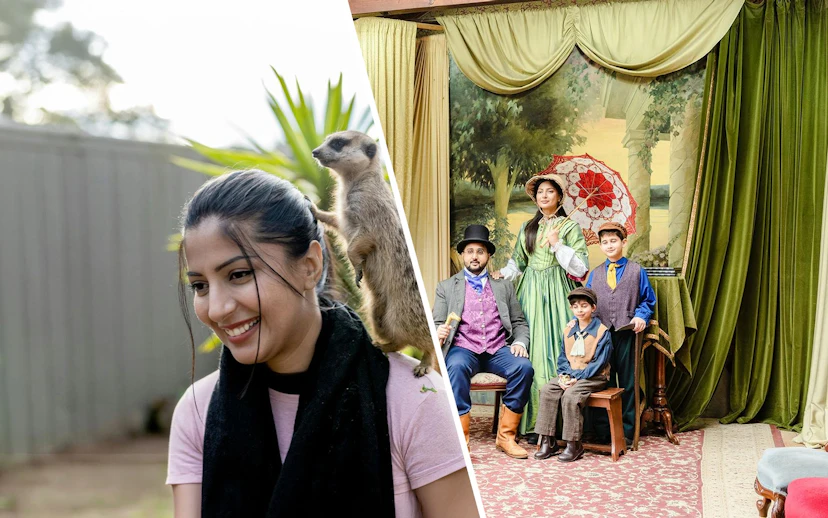
Meerkat Encounter | Enclosure entry + selfies on your own device + separate admission required | A visit where you want the most interactive add-on and are happy to build your day around a timed slot | From A$95 |
Tiger Encounter | Tiger feeding via tongs + 1 digital photo + separate admission required | A visit where you want the park’s most distinctive paid experience and a clear reason to pre-book | From A$99 |
How do you get around Ballarat Wildlife Park?
The park has a handful of clear zones rather than one long linear route, and you can see the basics quickly but still miss the best timing windows if you wander without a plan. The key crowd-flow move here is doing the central grasslands first, because the kangaroos are most active early, while the billabong side gets busier around the noon talks.
Park zones and suggested route
- Entrance and koala zone → koalas, tree kangaroos, encounter check-in → 30–45 minutes.
- Central grasslands → free-roaming kangaroos and emus → 45–60 minutes.
- North wing / predator row → Crunch’s lagoon, tiger sanctuary, cassowaries → 30–40 minutes.
- Reptile House and nocturnal area → snakes, reptiles, darker indoor exhibits → 25–35 minutes.
- Billabong and family zone → penguins, meerkats, café, and sandpit → 30–45 minutes.
- Tasmanian devil area → breeding-program focus and late-afternoon talk → 15–20 minutes.
Suggested route: Start in the kangaroo paddock while the animals are still feeding, circle back to koalas before encounter lines build, hit the penguin and meerkat side around talk times, then save the Reptile House for later when school groups thin out and finish with Tasmanian devils or the tiger presentation.
Maps and navigation tools
- Map: On-site orientation boards and the daily talk board at entry cover the loop and presentation times, so photograph them before you walk in.
- Signage: General wayfinding is good enough for the main loop, but it’s easy to miss tree kangaroos and smaller species if you rely only on casual wandering.
- Audio guide / app: There’s no must-have audio guide here; the included keeper talks add more value than an app would for most visitors.
- Large outdoor POIs only: You won’t need trail tech or offline GPS, but you will save time by planning your order around talk times rather than walking the loop twice.
💡 Pro tip: Photograph the daily presentation board before you buy kangaroo feed — backtracking later for talk times usually costs you 10–15 minutes and breaks the visit’s rhythm.
Get the Ballarat Wildlife Park map / audio guide
Which animals and habitats should you prioritise?

Free-roaming kangaroos and emus
Species: Red kangaroos, gray kangaroos, and emus
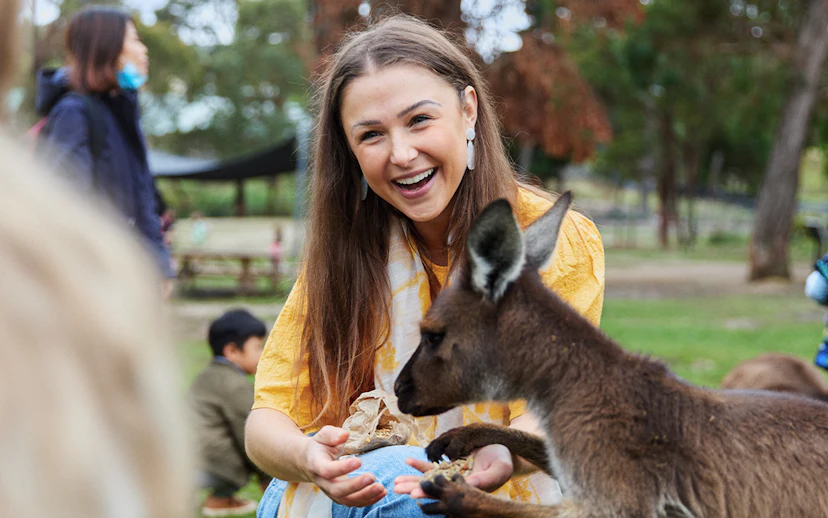
This is the heart of the park and the reason most people remember the visit so vividly. More than 100 kangaroos and emus share the central grasslands, and the experience feels less like an exhibit and more like stepping into their space. What visitors often miss is how much better it is before 11am, when the animals are still moving around rather than resting in shade.
Where to find it: Central grasslands immediately beyond the main entrance zone.
Koala colony
Species: Koala
The park has one of the largest captive koala colonies in Victoria, so this is more than a single photo stop. Standard viewing is already strong, but the real difference is knowing the law here: in Victoria you can pat and pose near a koala, not hold one. Many visitors rush through assuming they’ve ‘seen one,’ when this is also the area to slow down for a paid close-up encounter.
Where to find it: Near the entrance and encounter check-in area.
Tasmanian devils
Species: Tasmanian devil
This enclosure matters because the park has real conservation credibility here — it was the first private mainland park to breed Tasmanian devils successfully. If you only glance in passing, they can seem quiet, but the keeper talk adds the disease and breeding context that makes the stop land. Most visitors also misread the growling; it’s social behavior, not necessarily aggression.
Where to find it: Devil enclosure toward the later part of the main loop.
Crunch’s lagoon
Species: Saltwater crocodile
Crunch, the park’s 5m saltwater crocodile, adds real dramatic weight to a visit that otherwise leans tactile and family-friendly. This is one of the places where timing matters most, because a feeding demonstration changes the whole mood of the stop. Visitors often stand too close to the first barrier and miss the clearest sightlines.
Where to find it: North wing, near the crocodile enclosure and viewing area.
Tiger sanctuary
Species: Sumatran and Siberian tiger hybrids
The tigers are the park’s high-stakes counterpoint to the kangaroo paddock, and the presentation gives them more impact than a casual pass-by ever does. If you’ve booked the tiger encounter, this becomes one of the most memorable parts of the day; if you haven’t, the 2:30pm talk is still the best time to see them active. Many people leave this zone too quickly after one photo.
Where to find it: Back boundary of the park, beyond Crunch’s area.
Reptile House
Species: Australian reptiles, including the inland taipan
This indoor section is easy to underrate because it doesn’t advertise itself as loudly as the koalas or kangaroos, but it adds the education layer the rest of the park only hints at. The inland taipan is the headline species, yet the atmosphere matters too: it’s dark, echo-prone, and more intense than families expect. That’s exactly why it’s better later in the day when the noise drops.
Where to find it: Indoor wing off the main loop, near the predator and indoor exhibit zones.
💡 Don't leave without seeing: the tree kangaroos near the entrance and the Tasmanian devils later in the loop — both get missed because most visitors rush straight to the free-roaming paddock and never fully reset their route.
Facilities and accessibility
- 🎒 Cloakroom / lockers: There are no hire lockers, but the gift shop can sometimes hold small bags by request, so it’s worth packing light.
- 🚻 Restrooms: Toilets are behind the gift shop and near Crunch’s area, and both are easier to use before the noon café rush.
- 🍽️ Cafe: The licensed café serves hot food from 10am–3:30pm, and picnics are allowed in the outdoor seating areas if you’d rather bring your own.
- 🛍️ Gift shop / merchandise: The entrance shop is where you buy kangaroo feed and pick up simple souvenirs before entering the paddock.
- 🪑 Seating / rest areas: The easiest places to pause are around the café, the billabong, and a few shaded viewing spots near the larger enclosures.
- 🅿️ Parking: On-site parking is free and usually straightforward, though sunny school-holiday mornings are the busiest.
- ♿ Mobility: The main route mixes concrete and gravel and is broadly wheelchair-friendly, but some inclines are steep, and the kangaroo area has grass and dirt that take more effort after rain.
- 👁️ Visual impairments: Assistance animals aren’t permitted inside because of the free-roaming animals, so visitors who rely on them should contact the park before visiting and plan accordingly.
- 🧠 Cognitive and sensory needs: The Reptile House is dark and echo-prone, toilet hand dryers are loud, and the billabong side is busiest from 12 noon–2pm, so opening time is the calmest window.
- 👨👩👧 Families and strollers: Strollers work on the main loop, but grass paddocks and steeper sections require more pushing, especially once the paths fill around the penguin and meerkat talks.
This is one of the easier wildlife parks to do with children because the loop is manageable, the animals are close, and there’s enough interaction to keep attention high.
- 🕐 Time: 2.5–4 hours is realistic with children, with the kangaroo paddock, koalas, penguins, and one predator stop usually enough for younger kids.
- 🏠 Facilities: The sandpit, outdoor seating, nearby restrooms, and café make it easier to break the visit into shorter chunks.
- 💡 Engagement: Let children save one bag of feed for the second half of the roo paddock, because using it all at the first cluster usually leads to an early energy dip.
- 🎒 Logistics: Bring wipes, a water bottle, sun protection, and shoes with grip, and aim for opening time if you want the calmest animal interaction.
- 📍 After your visit: Sovereign Hill is the easiest child-friendly follow-on stop if you want to turn the day into a full Ballarat outing.
Rules and restrictions
What you need to know before you go
- General admission is easy to buy on the day, but koala, meerkat, and tiger encounters are timed and worth booking ahead.
- Bring a small day bag, because there are no hire lockers and only limited bag holding by request at the gift shop.
- Wear closed shoes with grip if rain is forecast, because gravel paths, grass paddocks, and steeper sections get slippery when wet.
- Plan the visit as one continuous loop, because stepping out mid-visit usually means missing keeper talks or encounter check-in windows rather than gaining flexibility.
Not allowed
- 🚫 Food/drink: Picnics are allowed in the outdoor seating area, but animals should only be fed the pellets sold at the entrance.
- 🐾 Pets: Pets and assistance animals are not permitted inside because the park has free-roaming kangaroos, emus, and dingoes.
- 🖐️ Touching animals: Only touch animals during approved feeding moments or booked encounters, and always follow keeper instructions.
Photography
Photography is allowed through most of the park, but non-flash photos are the safer default around animals and especially during koala experiences. Victoria law means you can pat and pose near a koala, not hold one, so don’t arrive expecting a cuddle shot. In shared paddock and encounter areas, staff instructions take priority over setting up the perfect angle.
Good to know
- Buy at least one extra bag of kangaroo feed at the entrance if that’s a priority, because walking back from the far paddocks adds roughly 15 minutes.
- Heavy rain can disrupt outdoor highlights, and crocodile feeds or koala photo sessions are the parts most likely to be canceled for safety reasons.
Practical tips
- Book encounters before anything else, because tiger and meerkat slots are the parts that actually sell out on school-holiday days and summer weekends, while general admission usually stays available.
- If you’re arriving by train, don’t treat Ballarat Station as the finish line — the park is about 3km away, and missing Bus 20 usually turns into a roughly A$12 Uber ride.
- Do the kangaroo paddock before 11am if you want the best version of it, because the animals are more active then and the light is better for photos.
- Save the Reptile House for after 2:30pm if you want a quieter visit, since school groups and midday family traffic tend to thin out by then.
- Carry a small bag rather than a bulky backpack, because there are no official lockers, and bigger bags become awkward on gravel paths and in encounter spaces.
- Eat either before 12 noon or after 2pm if you want hot food, because the café line can run 15–20 minutes around 1pm.
- If you only have 2 hours, skip lunch and time your visit around either the tiger presentation or the kangaroo feeding window — trying to do both plus café time usually leaves the middle of the park rushed.
What else is worth visiting nearby?
Commonly paired: Sovereign Hill
Sovereign Hill
Distance: 2km — 4 minutes by car
Why people combine them: It’s Ballarat’s most natural same-day pairing — one stop gives you the city’s gold-rush story, and the other gives you the wildlife counterpoint.
Book / Learn more
Commonly paired: Eureka Centre
Eureka Centre
Distance: 3.5km — 7 minutes by car
Why people combine them: It works well if you want a half-day wildlife visit followed by a shorter history stop without committing to another full-scale attraction.
Book / Learn more
Also nearby
Art Gallery of Ballarat
Distance: 4km — 8 minutes by car
Worth knowing: This is a good lower-energy stop if you want to cool down after the park and spend an hour somewhere quieter in central Ballarat.
Lake Wendouree
Distance: 6km — 12 minutes by car
Worth knowing: It’s better for a post-visit walk or picnic than as a paired attraction, but it’s one of the easiest ways to slow the day down after a family-heavy morning.
Eat, shop and stay near Ballarat Wildlife Park
- On-site: Ballarat Wildlife Park Café, serving hot food and drinks from 10am–3:30pm, is convenient rather than destination-worthy, and best used when you don’t want to leave the park’s daily schedule.
- Craig’s Royal Hotel (12-minute drive, 10 Lydiard Street South): Historic hotel dining in central Ballarat, better for a slower post-visit meal than a quick snack.
- L’espresso (11-minute drive, 417 Sturt Street): Reliable café option for coffee and brunch if you want to eat before arriving at the park.
- The Forge Pizzeria (12-minute drive, Armstrong Street North precinct): Easy family-friendly fallback for a casual sit-down meal after the visit.
- Pro tip: If you want the on-site café, eat before 12 noon or after 2pm — the 1pm window is when the food queue and family traffic overlap most.
- Ballarat Wildlife Park gift shop: Kangaroo feed, plush animals, and straightforward souvenirs right by the entrance, best bought before you head into the paddock.
- Bridge Mall Ballarat: Central Ballarat shopping strip for practical errands and general retail if you need something after the park rather than wildlife-specific souvenirs.
Ballarat East works best if you’re driving, visiting for one night, or building a regional Victoria road trip around Ballarat. It’s not the most atmospheric base for food or evening walking, so most visitors are better off staying closer to central Ballarat or Lake Wendouree if they want more choice after the park.
- Price point: Ballarat East is usually more practical than polished, with better-value motels and simpler road access than the city center.
- Best for: Short stays where you want a fast drive to the park and Sovereign Hill without city-center parking or extra logistics.
- Consider instead: Central Ballarat or the Lake Wendouree area if you want more restaurants, easier evening walks, and a stronger sense of place for a longer stay.
Frequently asked questions about visiting Ballarat Wildlife Park
Most visits take 2.5–3.5 hours, though you can loop the park in about 90 minutes if you skip talks and lunch. The difference comes from timing: kangaroo feeding, keeper presentations, and any paid encounter quickly turn a short walk into a half-day visit.
No, you usually don’t need to pre-book general admission, because most visitors buy on the day. It’s the encounters — especially tiger and meerkat slots on school-holiday days and summer weekends — that are worth locking in ahead.
Yes, but only on busy days. Pre-booking mainly helps you bypass the ticket-booth purchase queue on weekends and school holidays, while weekday afternoons often have little or no line to save.
Arrive 10–15 minutes early for a paid encounter and right at opening if kangaroo feeding matters most to you. The first hour is the calmest part of the day, and it’s when the free-roaming animals are usually easiest to interact with.
Yes, you can bring a small bag or backpack. Large bags are less convenient because there are no hire lockers, and only limited small-bag holding may be available by request at the gift shop.
Yes, photography is allowed through most of the park. Non-flash photos are the safest default around animals, and while you can pat and pose near a koala in Victoria, you can’t hold one for a photo.
Yes, groups can visit without much trouble, but it works best if you agree on a meeting point and a talk schedule before splitting up. The park is compact, though encounter guests should still allow extra time because those sessions run on fixed slots.
Yes, it’s one of the easier wildlife parks to do with children because the route is manageable, the kangaroo paddock is genuinely interactive, and there are enough talks and rest stops to break up the day. Most families find 3–4 hours is the sweet spot.
Yes, much of the park is wheelchair accessible, but it’s not completely effortless. Concrete and gravel paths cover most of the route, while steeper inclines, grass sections, and wet-weather footing in the kangaroo area can make parts of the visit slower.
Yes, there’s an on-site café open from 10am–3:30pm, and central Ballarat has better sit-down options 10–15 minutes away by car. If you want to stay inside the park’s rhythm, eat early or late and avoid the 12 noon–2pm rush.
No, you can’t hold a koala here because that isn’t allowed under Victorian rules. You can still do a close-up pat-and-pose style encounter, which is the right option if a koala photo is one of your must-haves.
Yes, feeding the kangaroos is one of the main reasons people visit. Buy the approved pellet feed at the entrance, use a flat palm, and do it early in the day if you want the most active interaction.