Southern Ocean waves began carving the cliffs 10–20 million years ago, leaving sea stacks shrinking a few centimetres each year.
Discover the 12 Apostles on the Shipwreck Coast
The 12 Apostles are the stars of the Great Ocean Road — towering limestone stacks rising dramatically from the Southern Ocean. Just a few hours from Melbourne, this natural wonder is one of Australia’s most iconic sights and an easy add-on to your trip.
Why should you make the trip?
Sunrise & sunset drama
Catch the Apostles at dawn when the limestone blushes pearly pink, or wait for sunset as the stacks explode in molten gold. These hours take you away from tour‑bus crowds, so you’ll have breathing room for tripod shots and quiet wave‑watching.
Iconic road‑trip route
The drive from Melbourne is part of the show: curve past surfing towns, spot koalas in roadside gums, then detour to Loch Ard Gorge for shipwreck lore before the Apostles appear. Or even better, do a reverse tour starting with the Apostles!
Effortless access for everyone
A sealed underpass and gently sloped boardwalk run directly from the car park to the main viewpoint, allowing prams and wheelchairs to easily reach the railings. No hiking boots required.
Origin of the 12 Apostles
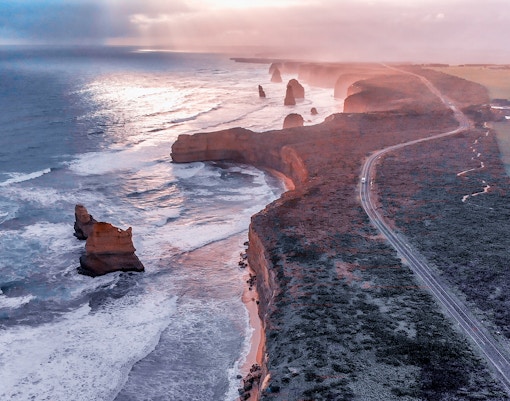
Formation
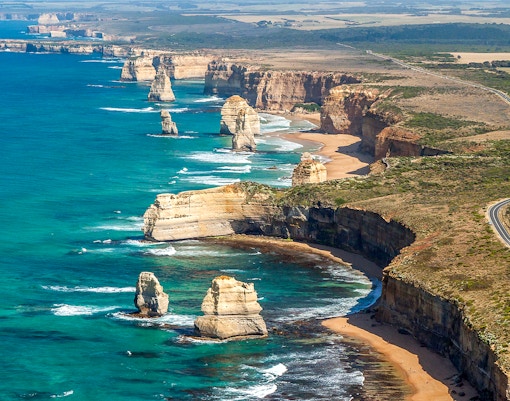
How many remain
9 stacks were visible in the 1920s; one collapsed in 2005, so 7 are left standing. Geologists expect more change within decades.
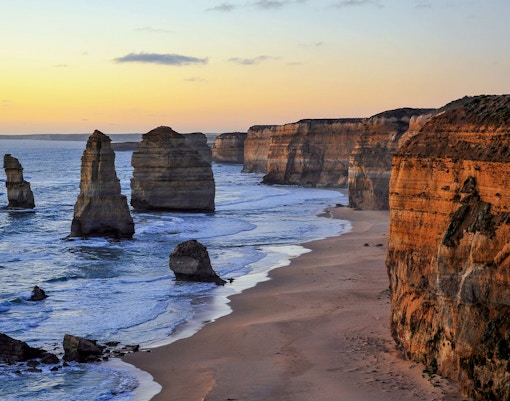
Name swap
Early settlers called them the “Sow and Piglets.” Tourism officials rebranded the group the “12 Apostles” in 1922—there were never twelve, but the new name stuck.
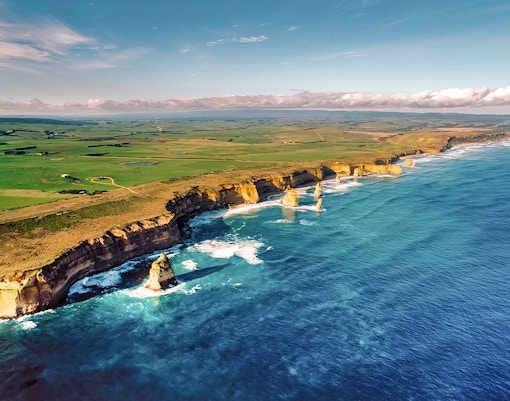
Shipwreck legacy
Between Cape Otway and Allansford (about 240km), more than 700 ships met their end on hidden reefs and roaring surf. Timbers from the 1878 Loch Ard wreck still rest beneath the waves near the gorge that bears its name.
Best places to photograph the 12 Apostles
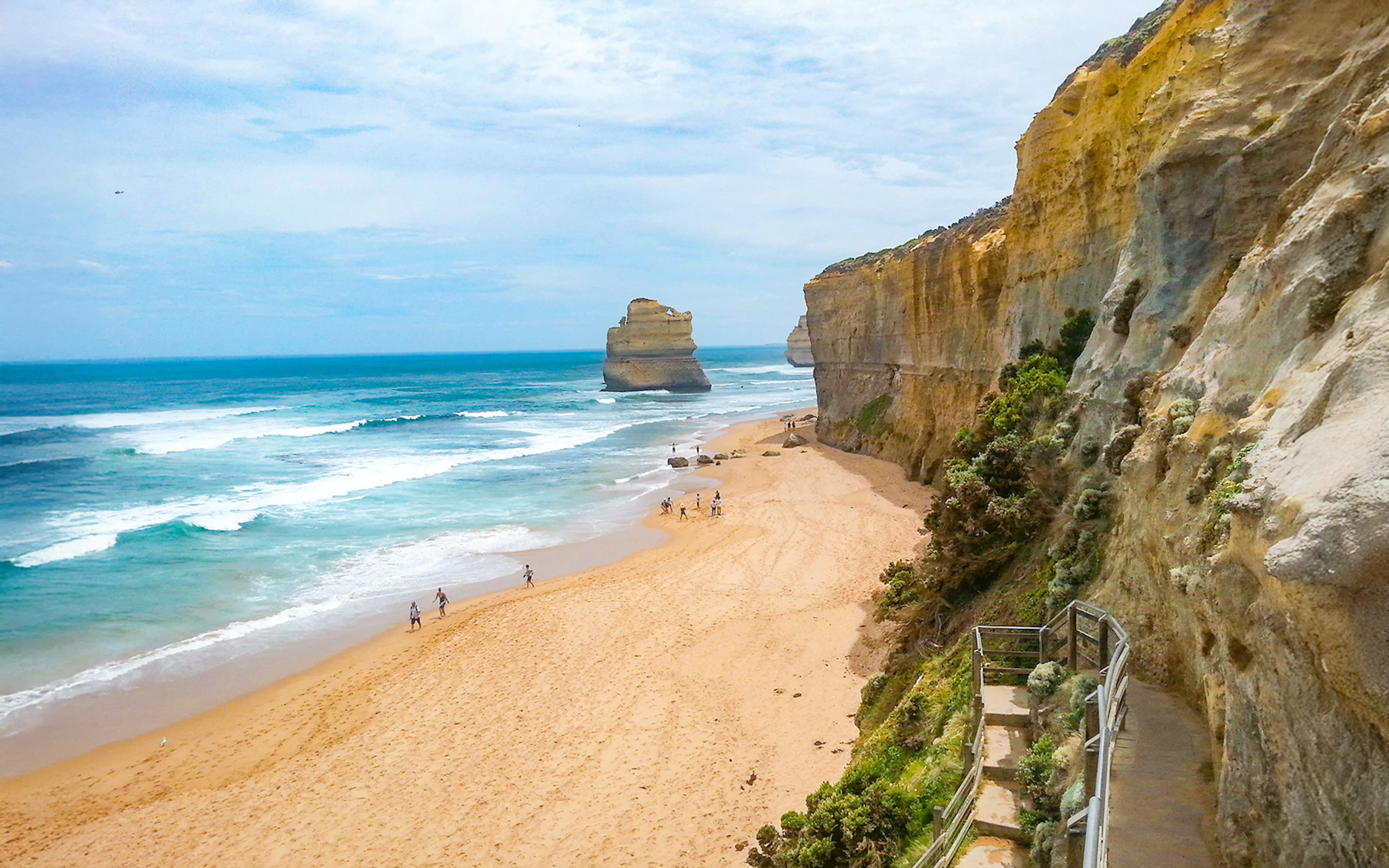
1/4
Gibson Steps
Descend 86 timber steps to beach level for an eye-level perspective of the 12 Apostles. But make sure to check tide charts before heading down.
Main Apostles Viewing Platforms
Sunset paints the limestone orange and pink. Two boardwalks give plenty of elbow room for tripods.
Loch Ard Gorge Deck
Mid-morning light turns a part of the ocean into bright turquoise. For low-angle shots, a short path leads from the deck to the beach below.
Bay of Islands
There are dozens of smaller stacks and arches, usually with fewer crowds. During late afternoon, sunlight highlights the rock textures.
How to access Gibson Steps beach
Yes, you can stand on the sand below the cliffs and get a splendid view of the Apostles. The beach is accessible when the tide is out:

- Follow the sign-posted path west of the main Apostles car park.
- Descend the 86-step staircase to the beach.
- Arrive at least an hour before high tide; rising water can block the return.
- Wear sturdy shoes—loose sand and limestone chunks can be slippery.
- Stay clear of cliff bases; rockfalls happen without warning.
🚨*Disclaimer – Loch Ard Gorge beach access is currently closed because a rock fell on the steps. Repairs are underway, and it will reopen to visitors once it's safe.*
Why go with a guided tour
- No parking headaches—sunset spaces fill early; tours have reserved spots.
- Local insight—guides share the back-stories of fallen arches and survivor tales from the Loch Ard wreck.
- Great value—transport, park fees, and dinner snacks often cost less together than they would separately for fuel, tolls, and meals.
- Focus on photos—you shoot; an expert driver tackles the twisty B100 highway after dark!
Frequently asked questions about the 12 Apostles
The name is symbolic — there were never twelve stacks. Only 9 were visible from land when they were named, and now 7 remain after one collapsed.
They were formed over millions of years as wind and ocean waves eroded the limestone cliffs, carving out caves and arches that eventually turned into standalone rock stacks.
Early morning or late afternoon for fewer crowds and golden light. Sunset is especially popular for photography.
You can’t access the beach directly beneath the stacks, but nearby Gibson Steps lets you walk down to the sand and see some of the formations from sea level.
Yes, visiting the Twelve Apostles lookout is free and open year-round. There are no tickets needed unless you're joining a guided tour.
Yes, there’s a large free car park across the road with a pedestrian tunnel leading to the lookout. It can get busy during peak hours.
Yes, toilets and basic facilities like picnic tables and information boards are available near the car park.
Most visitors spend 30 to 60 minutes exploring the lookout area, taking photos, and enjoying the views. You can stay longer if you’re combining it with nearby spots like Loch Ard Gorge.
No, drones are not allowed at the Twelve Apostles or within Port Campbell National Park without a permit, due to safety and environmental rules.
It’s about 227km (roughly 2 hours 45 minutes by road) from Melbourne via the Great Ocean Road — longer if you stop along the way (which you should!).


